From Photographer to Filmmaker: Why I Made the Leap
You can make a short film with no budget, no film school, and no professional gear. I know because I did it twice — and both films were selected by multiple international festivals, winning Best Documentary Short at two of them. My name is Pavel Demidovich. I am a film photographer whose work has been published in Playboy and Vogue and exhibited in Paris, Milan, and New York. I shoot with a Nikon FM2n and a Nikonos V — my journey from software engineer to film photographer started with a Soviet Zenit I found while moving apartments. I am also the founder of SnapSign, the mobile model release app we built for photographers and filmmakers. But when I decided to make my first film, none of that mattered — I had zero filmmaking experience, no crew, no equipment, and no budget. What I did have was a story I needed to tell, and that turned out to be enough.
A short film is a film under 40 minutes — short enough to submit to festivals and long enough to tell a real story. In practice, most first-time shorts run between three and fifteen minutes. That is the sweet spot: enough time to build an arc, not so much that you drown in footage you cannot afford to edit. This guide is the step-by-step account of how I went from still images to two short documentary films — Analog Waves and The Heart of Photography — screened at eight festivals across the US, Europe, Asia, and South America. It is written for photographers who feel the pull toward motion and sound but do not know where to start. No film school. No grant applications. No waiting for permission.


If you are a photographer who has ever wondered what your work would feel like with a voiceover, a score, and a narrative arc — this is for you.
Search “how to make a short film” on Google and you land in a sea of film-school blogs, Reddit threads, and YouTube playlists — over 3 billion results, with the top spots held by generalist guides and forum posts. What you will not find is a guide written by someone who shot two films with no budget, no crew, and no filmmaking background, then watched both get selected by eight international festivals across four continents. That gap — between advice from people who studied film and proof from someone who built films from nothing — is why this article exists. There are 720,000 searches a month for “how to make a short film” and its variants. This guide is for the ones who type those words into Google and mean it.
Why Photos Were Not Enough
A strong photograph captures a moment. It can freeze an emotion, a gesture, a lifetime in a single frame. But it cannot capture you — your voice, your process, the way you think behind the camera. After years of publishing and exhibiting, I had thousands of images that told other people’s stories. What I did not have was a single piece of work that told mine.
This is the gap that pulls many photographers toward filmmaking. You build a portfolio, you get published, you exhibit — and then you hit a ceiling. The work is strong, but the artist behind it is invisible. Film changes that. Motion, sound, pacing, and narrative give you tools that a single frame never will. A 3-minute short film with a voiceover can communicate more about who you are as an artist than a gallery wall of 50 prints.
A photographer on Reddit described his struggle in a thread titled simply “I’m having an artistic identity crisis as a photographer.” His photos, he wrote, “were technically nice, but they felt like postcards or Instagram pictures. Pleasant to look at, but ultimately forgettable.” The top response — with nearly 50 upvotes from a photographer who had just closed a solo museum exhibition — was direct: think in series. Ten to twelve images that tell one story. A single narrative arc, not a thousand scattered frames. That advice is excellent. But I would take it further: if you can already think in images, the next leap is to think in scenes. A short film is a series that moves.
The problem is not that photographers lack the visual skills for filmmaking. It is that they believe they need credentials they do not have. A film degree. A RED camera. A full crew. A budget. I believed all of that too — until I stopped believing it and started making something instead.
Start With the Why, Not the Script
Before you write a single scene, answer one question: why does this film need to exist? My answer was simple. I wanted a short film I could send to galleries, magazines, and festivals — a piece of work that showed who I am as an artist, not just what I shoot. Your “why” is your foundation. If you are chasing views or trying to impress strangers, you will burn out before the edit is finished. If you make something that genuinely matters to you, it will resonate — even if it is raw, even if it is imperfect, even if you cringe at your own voiceover the first time you hear it.
A clear why also solves the hardest problem in no-budget filmmaking: keeping people motivated. When you cannot pay your crew, the only currency you have is belief in the project. If you radiate that belief — if you can articulate exactly why this film matters — people will work through heat, rain, and long nights for nothing more than the pride of being part of it.
Write the Vision, Not the Script
A common myth is that you need a detailed, properly formatted screenplay before you can start. You do not. For both of my films, I began with a simple Google Doc containing four things: what I wanted to show, the people I wanted to include, the key emotions or themes, and a loose beginning-middle-end structure. That is it. No scene numbers. No dialogue formatting. Just a clear picture of what the film would feel like.
Then I showed it to a friend with filmmaking experience. He asked questions I had not considered. He suggested structural changes. He turned my loose ideas into a narrative arc that actually worked. The lesson: do not hoard your ideas until they are perfect. Share them early, while they are still malleable, with someone who knows more than you do. Collaboration at the vision stage costs nothing and saves months of wrong turns later.
If you are stuck, start with three sentences: where the film begins, what changes by the middle, and where it ends. Everything else is detail you can fill in as you go.
Once you have a vision on paper, the next problem is obvious: you cannot shoot it alone. Here is how you find people who will say yes — even when the budget is zero.
Build a Crew That Believes in the Story
Forget hunting for the most expensive DP or renting a cinema camera. The real challenge on a zero-budget film is finding someone who genuinely cares about your story. I found my cinematographer among my friends. He had screened films at Cannes, won accolades, and — most importantly — shared my enthusiasm for indie projects. He believed in the vision enough to shoot and edit both films for a symbolic fee. We stayed up late, filmed in heat and rain, and built something we both take pride in.
If you are starting from scratch, here is where to look: your creative friends, collaborators from past photo shoots, film students who want to build their reel, local indie filmmaker communities on Facebook or Reddit. The pitch is simple — “I am making a short film with no budget, here is the vision, I need someone who cares about the story as much as I do.” Be clear. Be organized. Be the kind of person someone wants to work with at midnight on a Saturday. People say yes when the energy is right.
One thing I learned: on a no-budget set, attitude is everything. If you are stressed, the crew is stressed. If you are grateful and focused, they will be too. Buy the food. Say thank you. Credit everyone properly. The film community is small — people remember how you made them feel during the shoot long after they forget what the film was about.
Gear, Sound, and the Details That Make the Difference
Most first-time filmmakers obsess over the wrong things. They spend weeks researching cameras and lenses, then record dialogue with the built-in microphone and wonder why the film feels amateur. Ask Reddit’s r/Filmmakers community: “Do I get a cheap camera or use my phone?” and the top responses are unanimous — phone, plus lav mics. A $700 Samsung with a Smallrig S70 wireless microphone will sound better than a $3,000 mirrorless with its built-in preamp. The other consistent advice: download the Blackmagic Camera app so you can lock focus and set manual exposure. The hierarchy of what actually matters on a no-budget short film is: story first, sound second, visuals third. Get those in the right order and everything else follows.
Sound Is Half Your Film
Sound carries at least half of your film’s emotional weight — probably more. Bad visuals with good sound feel like a stylistic choice. Good visuals with bad sound feel like a mistake. For The Heart of Photography, I recorded a voiceover instead of memorizing lines on camera. This turned out to be the single best production decision I made. A voiceover lets you write precisely what you want to say, record it in a quiet room with a decent microphone, and layer it over your best footage. No on-camera nerves. No wind noise destroying your dialogue. No retakes because someone forgot a line.
For music, use royalty-free platforms like Artlist or Epidemic Sound. Avoid commercial tracks unless you want copyright claims blocking your festival submissions. A well-chosen instrumental track paired with a sincere voiceover can make a no-budget phone film feel premium. The right music at the right moment will land harder than any camera upgrade ever could.
Plan Locations Smartly
Both of my films were shot across six to seven different locations each. That meant coordinating schedules, checking light conditions, and hoping the weather held. For The Heart of Photography, I kept everything local — simple, manageable, low stress. For Analog Waves, I made a different choice: we shot in Sri Lanka. And that came with chaos: unpredictable surf conditions, tropical rains that killed entire shooting days, travel expenses that added up fast, and gear that overheated in the humidity.
The lesson: your first short film should be shot somewhere you feel comfortable. Keep logistics simple. Shoot close to home. Remove every variable you can control so you can focus on the ones you cannot — like weather, people running late, and the thousand tiny crises that every film set produces. Once you have one film under your belt, then take on the challenge of a remote location. Sri Lanka was the right call for my second film, not my first.
Casting: Use Real People With Real Stories
I had an advantage — I had worked with models and studios for years, so I reached out to people I already trusted. If you do not have that network yet, start by filming yourself. A voiceover paired with b-roll of your daily routine as an artist creates an intimate, authentic film that no cast of strangers could replicate. Film behind-the-scenes of your shoots. Film your process — loading film, setting up lights, waiting for the right moment. These quiet, honest moments often resonate more than scripted scenes with amateur actors.
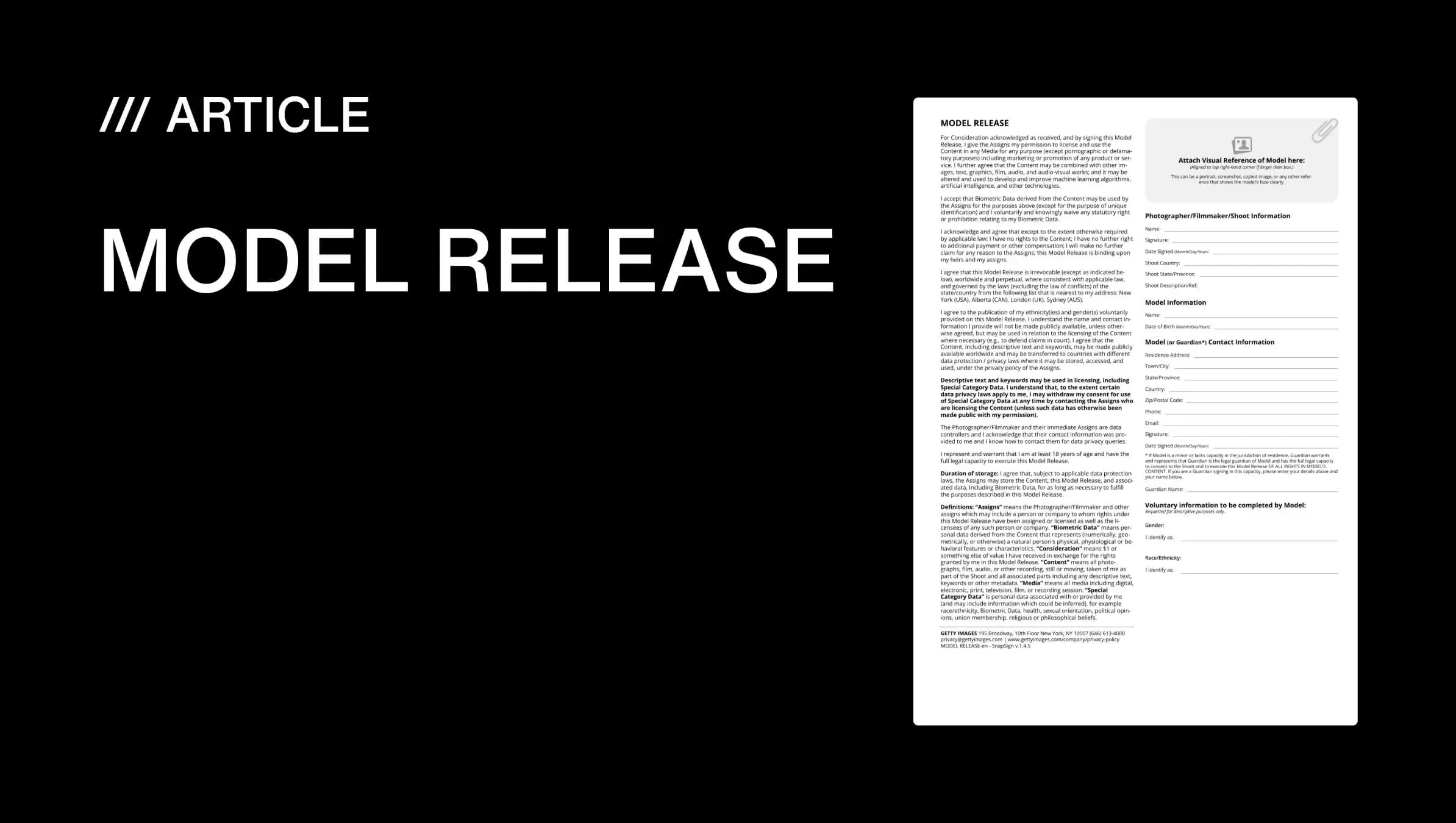
You do not need professional actors for a documentary-style short film. You need real people willing to be themselves on camera. Friends, clients who are comfortable being filmed, fellow creatives who understand what you are trying to build. One practical note: always get permission in writing. I use SnapSign for this — it lets you build and sign model release contracts right on your phone, no printers or PDFs needed. When you are filming real people in real locations, having signed releases makes your project look professional, protects you legally, and signals to festivals that you handled the production seriously — even if it was your very first film.
Before you move from planning to shooting, here is what you actually need in your pocket:
- A vision doc. Three sentences: where it begins, what changes, where it ends. Not a screenplay. A compass.
- One collaborator who believes in the story. Not someone who owes you a favor. Someone who read the vision doc and meant it when they said yes.
- A phone or borrowed camera with the Blackmagic Camera app. Lock focus. Set manual exposure. Done.
- A lav mic. The Smallrig S70 costs under $100. Your phone’s built-in mic will ruin footage you cannot reshoot.
- A voiceover script. Write it before you record a single frame. You will discover what the film is about while writing the words, not while editing the clips.
- Signed releases from everyone on camera. Use SnapSign or any tool that generates a PDF. If you cannot prove someone consented, the festival cannot screen the film.
That is six things. Not one of them requires money you do not already have or a skill you cannot learn in an afternoon.
Editing, Posters, and Titles — The Final Layer
The shoot is only half the work. The edit, the visual identity, and the title are what turn raw footage into a film someone actually wants to watch and submit.
Editing: Where the Story Comes Alive
Editing is where your film becomes itself. Your editor will build a rough cut — an assembly of everything you shot in roughly the right order — and then refine it with your feedback. In my case, my cinematographer was also the editor, which saved an enormous amount of back-and-forth. If you are editing yourself or working with a separate editor, stay involved at every stage. Review every cut. Check pacing — does a scene drag? Does a transition feel rushed? Check sound — is the voiceover clear? Does the music swell at the right moment? Give specific, constructive feedback. “This section loses momentum around the two-minute mark” is actionable. “I don’t like it” is not.
If you have never edited before, start with DaVinci Resolve — the free version is powerful enough to cut a festival-quality short film. Expect the edit to take at least as long as the shoot, probably longer. That is normal. The assembly always looks wrong at first. Keep refining.
A 14-year-old posted on r/videography: “I’m a freshman in high school. Outside of school I virtually do nothing. But I do love films.” He had a mediocre PC, a phone camera, and zero experience. The top responses — from people who had spent decades in film and TV — were unanimous: just start shooting. Finish it. You will be proud of yourself. If a 14-year-old with a phone and a janky computer can start, so can you. The only difference between that kid and you is the number of completed projects.
AI Tools You Did Not Have Five Years Ago
When I made The Heart of Photography and Analog Waves, AI video generation was not a practical tool. Today it is — and if you are making a no-budget film, ignoring it is like shooting film today and refusing to scan your negatives. Tools like Higgsfield let you generate b-roll, establish shots, and transitional footage from text prompts — the kind of filler material that would otherwise require location scouting, a second shoot day, or stock footage licenses you cannot afford.
The practical use for a first-time filmmaker: you have a voiceover about your creative journey, but you need visual material to carry it. Your phone footage covers most of it, but there is one section — say, a childhood memory or an abstract concept — where you have nothing. Instead of cutting that section or spending a weekend trying to shoot something approximate, you generate it. The key is using AI footage as connective tissue, not as the main event. Your real footage carries the emotional weight. AI fills the gaps that would otherwise become dead air or awkward cuts.
A word of caution: film festivals have varying policies on AI-generated content. Check submission guidelines before building a film around generated footage. Used as a supplement rather than the core material, it rarely raises issues — but transparency matters. If a significant portion of your visuals are AI-generated, disclose it. Festival programmers respect honesty more than they respect a perfectly polished frame.
Posters, Fonts, and Visual Identity
For my first film, a friend designed the poster for free. For the second, I hired a professional designer — and it was worth every cent. Typography, title placement, color palette — these decisions shape how festivals, press, and audiences perceive your film before they press play. A polished poster signals that you took the project seriously. A thrown-together one signals the opposite.
If budget is zero, trade skills. Offer a photoshoot in exchange for poster design. Find a design student who wants festival collateral for their portfolio. The goal is a clear, minimal visual style that stays consistent across your poster, film titles, and any social media promotion. Consistency is what makes a tiny indie project feel like a brand.
Naming Your Film
A film’s title is the first thing anyone sees on a festival program. The Heart of Photography came to me one night — it simply felt right. Analog Waves was born from a structured brainstorming session. Both work because they are short, tonally aligned with the films they represent, and distinctive enough to remember.
Tips for naming your short film: keep it under four words, match the tone of the piece (a documentary should not sound like a horror film), and avoid anything that reads as a placeholder — “Untitled Project,” “My Story,” “Short Film 1.” Test three or four options on friends who have not seen the footage. Watch their face when you say each title. The one that makes them lean forward is the one you keep.
At this point, you have a vision, a crew, a plan for sound and locations, and a title. The temptation is to charge ahead. But before you do, let me be honest about when this whole endeavor is the wrong move — because I have seen too many people burn months on a film they did not actually need to make.
When NOT to Make a Film
This path is not for everyone, and it is worth being honest about when it is the wrong move. Do not make a film because you think it is the next logical career step. Do not make one because someone told you “photographers should do video.” Do not make one to chase views, impressions, or algorithm favor — short films are a terrible vehicle for any of those things.
Make a film only when you have a story that will not leave you alone. The process is too hard, too long, and too emotionally demanding to sustain on anything less than genuine creative need. If you are unsure, wait. Keep shooting stills. The idea will either fade — which means it was not the right one — or it will grow louder until you cannot ignore it. That is how you know it is time.
I am not saying this to be dramatic. If you need convincing that the wrong motivation leads to the wrong outcome, here is a real story from r/Filmmakers. A high school graduate about to start a film major posted a photo of his graduation card from a family friend — it contained a crumpled $5 bill and a note that implied film school was a joke. The same person sent his sister, a pre-med student at University of Miami, a check for $100. The thread got nearly 2,400 upvotes and 500 comments in three days. The reason people reacted so strongly is that every creative has heard some version of that note — and every creative who makes something despite it has a better story than the person who folded. Do not make a film to prove that family friend wrong. Make one because the story already exists inside you and it needs to get out. The festival acceptance letter is the only reply that matters.
There is also a practical line: some photographers simply do not enjoy the collaborative nature of filmmaking. Photography can be solitary — you, a camera, and a subject. A film set, even a tiny one, is a social organism. You are managing schedules, egos, weather, and equipment failures simultaneously. If working alone is part of why you love photography, a solo voiceover film with no crew might be the better format. If the collaboration itself feels like the reward, you are ready. And if you are ready, the next question is not how to make the film — you already know that. It is what happens after you finish. That is where festivals come in.
Film Festivals: How Two No-Budget Shorts Went Global
At first, my films were just portfolio pieces — personal projects I made to prove to myself that I could. Then a friend told me about FilmFreeway, and I decided to submit. I had no expectations. To my genuine surprise, both films were accepted — multiple times, across four continents. That single step — uploading a file and filling out a submission form — led to screenings in Los Angeles, London, Paris, Hong Kong, Bogota, and beyond. Here is exactly where each film screened.
“The Heart of Photography” — documentary short. Six festival selections, two Best Documentary Short awards. Screened at Dreamachine International Film Festival in Los Angeles (where it won Best Documentary Short), London Lift-Off Film Festival, Erotic & Bizarre Art Film Festival in Alicante, You Are the Judge, Web3 International Film Festival in Hong Kong, Hallucinea Film Festival in Paris (second Best Documentary Short win), and Muestra de Cine Erótico in Bogotá, Colombia. Not bad for a film shot with borrowed gear and a Google Doc as the script.
“Analog Waves” — surf documentary. Selected by Portuguese Surf Film Festival in Ericeira, Portugal, and Bilbao Surf Film Festival in Spain. Shot on location in Sri Lanka with exactly the kind of chaos you would expect from a no-budget tropical shoot — unpredictable surf, monsoon rains, and gear that overheated in the humidity.
Before you open FilmFreeway, make sure you have everything a festival needs to evaluate your film:
- Exported master file. H.264 or ProRes. 1080p minimum. Label it with the film title and year, not “final_v3_export.mp4.”
- Subtitles. Even if your film is in English. Festivals screen for international audiences, and a surprising number of submissions are rejected simply because the programmer could not understand a line of dialogue.
- A festival poster. 1500×2100 pixels minimum. If you designed one for the film, use that. If you did not, a clean still frame with the title overlaid works.
- A synopsis. Two to three sentences. Not what the film is about thematically — what literally happens on screen. “A film photographer travels to Sri Lanka to document surf culture on 35mm” is a synopsis. “A meditation on the intersection of art and nature” is a film school application essay.
- Three to five stills. High-resolution frames from the film. Pick the ones that make someone stop scrolling.
- A trailer or teaser. Under 60 seconds. Most festivals do not require one, but a good trailer separates the submissions that get watched first from the ones that get watched last.
- Credits file. Director name, runtime, country of origin, completion date, contact email. Copy and paste this into every submission form — do not retype it from memory at midnight before the deadline.
Now you are ready. If you are serious about getting your work seen, here is the practical path: get a FilmFreeway Gold subscription for $10-12 per month, which significantly reduces per-festival submission fees. Research festivals carefully — check their past selections, read filmmaker reviews on platforms like FilmFreeway itself, and avoid any event that appears to accept everything as a revenue model. Submit to five to ten reputable festivals rather than spraying fifty applications. Quality over quantity applies to submissions as much as it applies to filmmaking. Then be patient. Festivals often take months to respond. The silence is not a rejection — it is the pace at which this world moves.
The festivals that selected my films were not Cannes or Sundance. They were smaller, respected festivals that champion emerging independent work. That is the right target for a first or second film. Screen where your work fits. Build a festival history. Use each acceptance as a credential for the next submission.
One last thing about festival anxiety, because I know it will come. A filmmaker on r/Filmmakers asked: “What if my short film isn’t good enough for festivals?” The top-voted reply — from someone who had submitted to festivals repeatedly — was blunt: “The garbage you see at film festivals is deeply inspiring for anyone experiencing a certain kind of performance anxiety.” Another added: “I’ve seen so many films at festivals that kind of made me question my sanity and judgment because I can see my films are better.” The bar is lower than your fear tells you. The gap between “never submitted” and “screened at a festival” is one FilmFreeway form. Fill it out.
Final verdict - Independent Filmmaking
You do not need a film school diploma, a RED camera, or a five-figure budget. You need a story that will not leave you alone, a phone or a borrowed camera, and one other person who believes in what you are building. I made two short films this way — from zero — and both traveled further than I ever expected. Start with three minutes. Record a voiceover. Add music. Finish it. Submit it. The gap between “photographer who wants to make a film” and “photographer who has made a film” is not gear or money or connections. It is one completed project. Make yours.