Quick answer — Do you need a witness?
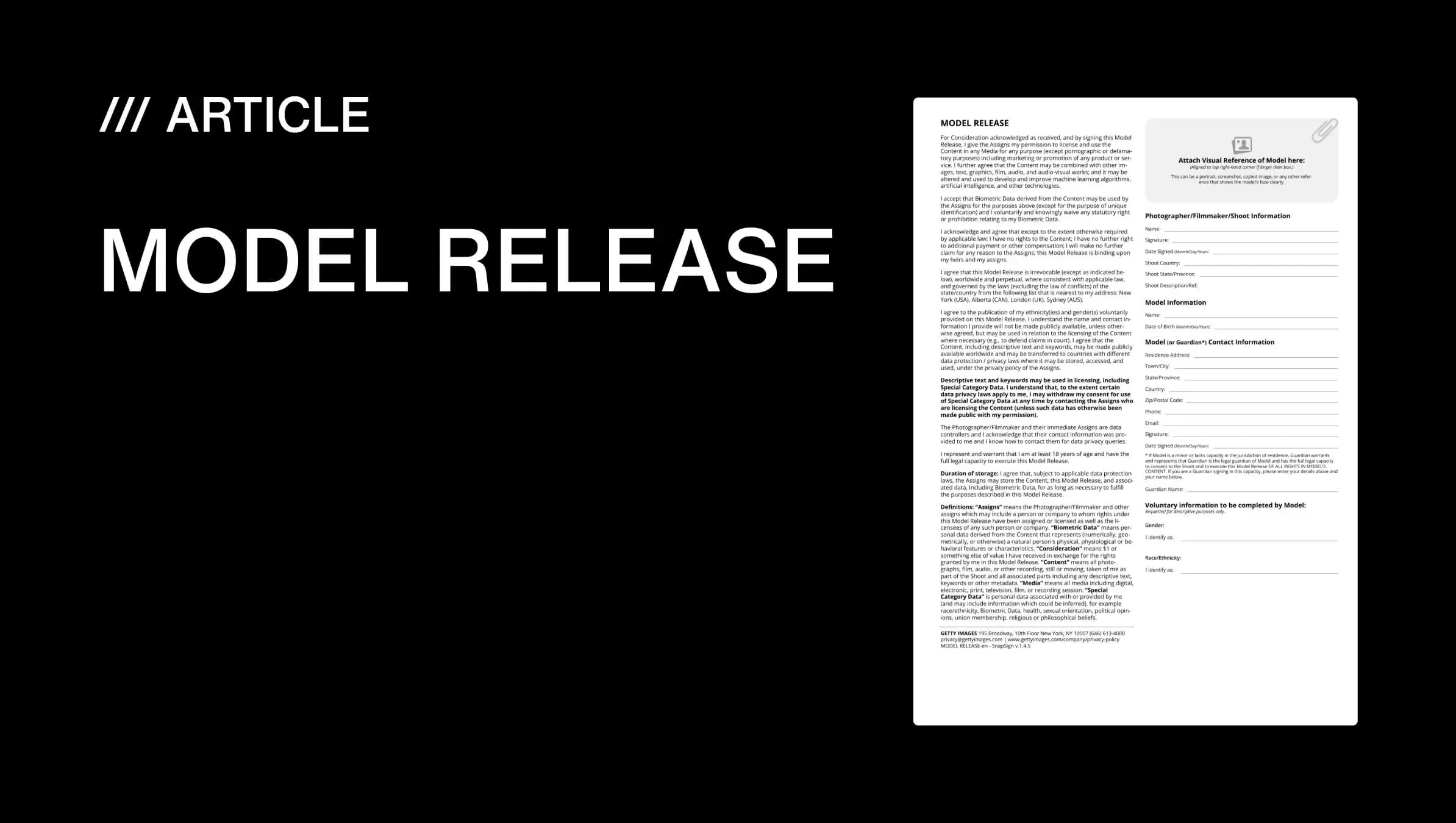
Under U.S. law, an independent witness is generally not required for an ordinary model release to be enforceable, although specific agreements and jurisdictions may differ. Stock-platform requirements are separate and vary by platform. Getty Images' published global release includes a witness section. Adobe Stock does not generally require a separate witness for adult model releases, while additional guidance applies to minors. Shutterstock contributors should follow the latest official release form and checklist rather than assume that a witness is universally mandatory. When a witness is included, they should be sufficiently independent and should observe the relevant signing event. If you are new to model releases in general, start with our complete model release guide for the fundamentals. Here is what the witness question actually means for your workflow — across all three levels: legal requirements, platform requirements, and best practices.
Who wrote this — and why it matters
I am Pavel Demidovich, a film photographer and filmmaker, and the founder of SnapSign. I have been on both sides of the model release — as a photographer working on location with a paper form and a pen, and as the person building tools that replace that paper form with a structured digital workflow. I have had stock submissions flagged for documentation issues. I have watched crew members leave set before the paperwork was complete. I have shot solo in apartments, forests, and rented studios with no third party in sight. Every recommendation in this article comes from having done it the hard way first.
SnapSign exists because the model release workflow — including witness collection when it is needed — should be the least stressful part of a shoot. We built a Witness participant type into our stock-compatible templates, added digital signing with structured records, and made the witness step work through the same workflow as any other participant. If you use our platform, you get field-level prompts that reduce the chance of omission. If you use paper or another tool, the principles in this article still apply — understanding the three levels of requirements is what keeps your submissions moving. Here they are, clearly separated so nothing gets confused.
The three levels: legal, platform, and best practice
Most confusion about model release witnesses comes from mixing up three different things. Separate them, and the whole topic becomes manageable.
Level 1 — Legal requirement. Under U.S. common law, a written contract is generally valid with just the signatures of the parties involved. No witness. No notary. As LawDepot confirms, "a witness is not a legal requirement for a release form." Some states have statutes that impose additional requirements for specific types of agreements, and jurisdictions outside the U.S. may differ. Minors add complexity: a contract with a minor is voidable at the minor's election in most states, and while a witness does not prevent that, a credible record of who signed and when may strengthen the factual record if the release is later challenged. If the release covers multi-year commercial usage with significant financial exposure, consult a lawyer in the relevant jurisdiction.
Level 2 — Platform requirement. Stock platforms set their own submission rules, which are separate from legal requirements. Each platform publishes its own release form, contributor guidelines, and checklist. The requirements on those documents — not forum discussions, contributor anecdotes, or third-party summaries — are what determine whether a submission passes review. The next section covers what each major platform's published documentation says, with links to the official sources.
Level 3 — Best practice. Even when neither law nor your target platform requires a witness, including one strengthens the factual record. A witness who observed the signing can provide an independent account if questions arise later. This is the level where photographers make their own judgment based on the shoot, the client, and the intended use of the images. We recommend including a sufficiently independent witness whenever practical — not because every platform demands it, but because a well-documented signing event is harder to dispute than a poorly documented one.
What each stock platform's published documentation says
Platform requirements are not uniform. The table below reflects what each platform's currently published official documentation says about witness fields. Platform requirements may change. Last verified: August 4, 2026. Always review the latest official contributor documentation before submitting.
| Platform | Witness requirement per published documentation | Official source |
|---|---|---|
| Getty Images / iStock | Published global release form includes a separate witness section. Contributors should complete all fields on the current official form. | Getty Images contributor article |
| Adobe Stock — adult model | Separate witness generally not required for adult model releases per Adobe's published guidelines. | Adobe Stock model release requirements |
| Adobe Stock — minor | Follow Adobe's current guardian and minor-release instructions. Published guidance recommends both parents sign where possible. | Adobe Stock model release requirements |
| Shutterstock | Follow the current official release form and contributor checklist. Do not assume a universal witness requirement — review the latest form directly. | Shutterstock contributor support |
| Stocksy | Published documentation lists witness name and signature as optional fields. Follow the current official release form. | Stocksy Help Center |
| Other platforms | Verify through each platform's current official contributor documentation. Requirements differ and change over time. | Check the platform's official contributor portal |
Getty Images is the most prescriptive of the major platforms. Their published global release includes a dedicated witness section, and contributors submitting through Getty should complete the current form as published. For Adobe Stock, the published guidelines state that a separate witness is generally not required for adult model releases. Adobe's published minor-release guidance recommends having both parents involved where possible — one as guardian, one as witness. Shutterstock's published contributor resources include a release form and checklist; contributors should work from the latest official versions rather than third-party summaries. Stocksy's published documentation lists witness name and signature as optional fields.
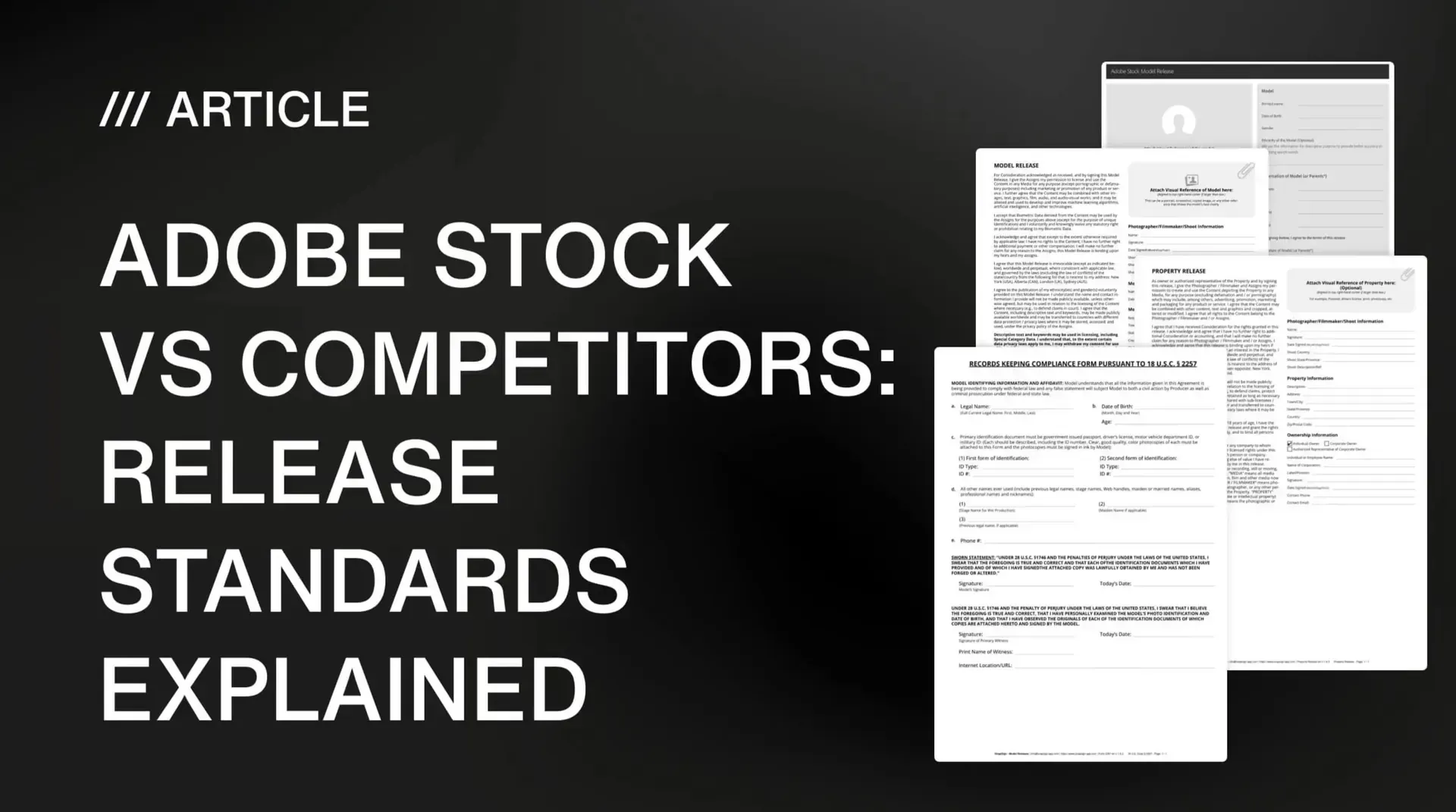
One release may satisfy multiple platforms if it includes every field that each target platform requires on its current official form. Check each platform's documentation to confirm. Our guide to SnapSign releases meeting Getty Images standards covers the Getty-specific workflow in detail. Our platform comparison guide walks through submission requirements across stock agencies.
With the platform landscape clear, the next question is practical: when you decide to include a witness, who qualifies?
Who can serve as a witness
A suitable witness should be sufficiently independent and able to credibly confirm the signing event. Exact eligibility may depend on the release, jurisdiction, client, and platform policy. One core rule is universal: a person cannot witness their own signature or serve as a witness to a document they are a party to. The photographer cannot witness the model's release.
Beyond that core rule, whether a specific person qualifies depends on context. Here is how common on-set roles typically map to witness eligibility, with the understanding that platform policies differ and should be verified:
| Potential witness | Typical assessment | Notes |
|---|---|---|
| Makeup artist / hair stylist | Commonly acceptable | Present on set, independent from the parties, sees the model before signing — natural identity verifier. Verify against platform requirements. |
| Second photographer / assistant | Commonly acceptable | Present on set, professional working relationship. If the assistant is employed by the photographer, the degree of independence may be questioned in some contexts. |
| Studio manager / location staff | Commonly acceptable | Third party, physically present, of legal age. Typically a strong choice due to independence from both parties. |
| Art director / client | May be acceptable depending on circumstances | May have a commercial interest in the shoot, which could affect perceived independence. Verify against platform requirements. |
| Model's friend or companion | May be acceptable depending on circumstances | Legally capable but has a personal relationship with one party. Some platforms may prefer a more neutral third party. |
| Photographer's spouse or family member | May be acceptable depending on circumstances | Not a party to the contract but has a personal and financial connection to the photographer. Some platforms may prefer a more independent witness. Verify against platform requirements. |
| The photographer | Not acceptable | A party to the contract cannot serve as its witness. Doing so may raise serious authenticity concerns. |
| The model | Not acceptable | Cannot witness their own signature. |
The strongest choice is someone already on set for another reason who is clearly independent of both parties. The makeup artist, hair stylist, or a location staff member are common examples. On a film set, a production assistant or second AD often fills the role. The key is planning: decide who the witness will be before the shoot, not after the model has already left.
For minor model releases, a parent or legal guardian must sign — that requirement is consistent across platforms. Platform-specific witness requirements for minor releases vary. Adobe Stock's published guidance recommends having both parents involved where possible, one signing as guardian and the other as witness. For any platform, always review the current official minor-release instructions.
Digital signing workflows — what they provide and what they do not
A well-designed digital signing workflow can create a detailed electronic record of the signing event, including timestamps, signer-provided information, link records, and document-integrity verification. This evidence may strengthen the documentary record, but it does not automatically prove identity, physical presence, voluntariness, legal capacity, or enforceability. Whether a given workflow satisfies a specific platform's requirements depends on that platform's current published documentation.
The advantage of a digital workflow over paper is structural: every field is prompted, nothing is illegible, and the sequence of steps is recorded. A paper form relies on human diligence — someone has to remember to fill in the witness block, print the name legibly, and match the date to the model's signature date. A digital workflow with prompted fields reduces the chance of omission because the form cannot be completed without addressing each field. That is not the same as proving who signed or that they signed willingly — it is a consistency mechanism, not a truth machine.
SnapSign captures witness signatures as a dedicated signing step. The witness receives a separate section with name, address, email, and signature fields. When you use a Template that includes a Witness participant section, the workflow prompts for that information before the contract can be finalized. On templates where the witness is optional, you control whether the field appears. Once signed, the witness information is embedded in the generated PDF.
SnapSign also generates a SHA-256 hash for each signed contract. SHA-256 verification helps demonstrate that the PDF has not changed since the recorded signing event. It confirms document integrity but does not independently prove the signer's identity, consent, authority, or the legal validity of the release. The hash answers one question — has this file been altered? — and it answers it reliably. The other questions depend on the signing process itself. For a deeper look at how digital and remote signing works in practice, read our complete guide to remote model release signing.
What to do when you are shooting alone with the model
This is the scenario that solo photographers encounter most: you are on location with one model, no crew, no assistant, no makeup artist. There is no third party available to serve as a witness. The shoot is happening. Here is what to do.
First, have the model sign the release anyway. A release signed by model and photographer without a witness is still a valid contract under U.S. law and establishes the terms of usage between the parties. Whether it satisfies a given platform's requirements depends on that platform's current documentation. A release with no witness is a valid contract with a less complete documentary record. No release at all leaves you with nothing. The choice is clear.
Second, plan for the witness question before the shoot. Options that solo photographers use successfully:
- Ask location staff. Shooting in a rented studio? The front desk person, the studio manager, or a staff member may be able to witness. Shooting in a hotel? A staff member at the front desk. Shooting in a public space? The café owner or a nearby shopkeeper who observed you working. Anyone of legal age who is not a party to the contract may qualify — but verify platform requirements about independence.
- Schedule the signing where a witness will be present. Meet the model at a coffee shop or studio office before heading to the location. Sign the release there. A witness who can say "I observed two people signing a document at this location on this date" provides a stronger record than no witness at all.
- Use a digital platform that creates a structured signing record. A model who signs through a SnapSign Signature Request receives a tokenized email link valid for 48 hours. The platform records the timestamp, the signer's provided information, and the link activity. A structured digital record — the fact that a unique, time-limited link was sent to a specific email address and a signature was completed through it — can help document the signing event. However, this electronic record does not replace an independent witness if a platform explicitly requires a witness signature on its current official form.
- Document the shoot thoroughly. Behind-the-scenes photos, timestamped messages with the model confirming the shoot date, payment records — these create supporting context around the release. If questions arise later, you have more than just the document.
A note on adding a witness after the fact. A person who did not observe the signing event should not sign as a witness to that event. The witness confirms what they personally observed — that the named person signed the document. Someone who was not present cannot confirm that. If a platform's current form includes a witness section, complete it at the time of signing with someone who is present. If no witness is available and the platform does not require one for adult releases, submit the release as signed by the parties. If the platform requires a witness on its current form, plan to have one present at the signing.
Finally, know which platforms' published documentation requires what. Adobe Stock's published guidelines state that a separate witness is generally not required for adult model releases. If you are a solo photographer who primarily submits to Adobe Stock and shoots adult models, your two-party release may be sufficient per their current documentation. Getty Images' published global release includes a witness section. Shutterstock contributors should follow the latest official form and checklist. Check each platform's current contributor portal before submitting. No forum post or third-party article — including this one — substitutes for reading the platform's own current documentation.
Common documentation mistakes around witnesses
Most issues with witness fields come from rushing, guessing, or deferring the paperwork until after the model has left. The mistakes are predictable — and preventable with a structured workflow.
| Mistake | Why it happens | How to prevent it |
|---|---|---|
| Witness signature date differs from model signature date | Photographer notices an empty field days later and asks someone to sign retrospectively | Complete all signatures during the same signing session, on the same date. A witness who did not observe the signing should not sign as having witnessed it. |
| Photographer fills in their own name in the witness field | No third party available, photographer enters themselves as witness | Never do this. A party to the contract cannot serve as its witness. Doing so may raise serious authenticity concerns. If no witness is available, leave the field blank if the platform permits it, or plan for a witness at the next shoot. |
| Witness name is illegible on a paper form | Rushed handwriting, ballpoint pen on a curved surface | Use a digital release — typed names are always legible. If using paper, have the witness print their name in capital letters below the signature, as Adobe Stock's checklist recommends. |
| Assuming one platform's requirements apply to all platforms | Photographer reads that Getty requires a witness and assumes the same for Adobe Stock and Shutterstock | Check each platform's current official form and contributor documentation separately. Requirements differ and change over time. Do not rely on third-party summaries. |
| Using a generic form that omits platform-specific fields | Photographer downloads a free PDF template that does not match any platform's current form | Start from the platform's own published release form. SnapSign templates for Getty, Adobe Stock, and Shutterstock are built from the fields that appear on each platform's official forms. |
| Not checking the platform's current documentation before submitting | Assuming requirements are static and what worked last year still applies | Platform requirements are subject to change. Review the current official form and checklist before each submission batch. Bookmark the contributor portals and check them periodically. |
Every one of these issues can be reduced or eliminated by using a structured digital workflow that prompts for each field and by checking the platform's current documentation before submitting. A paper form puts the entire burden on human diligence. A digital platform with prompted fields reduces the chance of omission — but it still requires the photographer to verify what each target platform actually needs. No tool replaces that step.
How to make witness collection part of your workflow
For shoots where a witness is needed — whether because the platform requires one, the client requests one, or you have decided it is the right practice for the project — a five-minute ritual built into every shoot eliminates the last-minute scramble. Here is the workflow:
- Before the shoot, identify your witness. Add a column to your call sheet: witness. Name a specific person. Do not write "TBD." If you are shooting solo and your target platform does not require a witness for adult releases, note that the release will be signed by the two parties only. If the platform or client requires a witness, confirm who will serve and that they will be present at the signing.
- At call time, complete the paperwork first. Before hair and makeup. Before the first light goes up. The model arrives, you exchange greetings, and the first thing that happens is the release. If a witness is involved, they observe the model and photographer sign, then add their own information. Five minutes, done. The rest of the shoot continues with the paperwork complete.
- Use a digital release that prompts for every field. A SnapSign template with a Witness participant section prompts for the witness name, email, and signature before allowing the contract to be finalized. The app walks through the signing sequentially — model, then photographer, then witness — and each step is recorded. You cannot accidentally skip a prompted field because the workflow does not advance until it is addressed.
- Verify the generated PDF against the platform's checklist. After the contract is signed, open the PDF. Check that all required fields are present and legible, signatures are captured, and dates are consistent. Compare against the target platform's current official checklist. A 30-second review before uploading prevents a multi-day wait for a rejection notice. SnapSign's PDF generation produces a consistent format — no handwriting to decipher, no missing blocks.
This workflow takes five minutes. The photographers who adopt it before their first submission avoid most documentation-related delays. The habit is simple: paperwork first, shoot second, verify before upload. With that system in place, the witness question stops being something you wonder about. Which brings us to the bottom line.
Final verdict — Model release witnesses
The witness question has three answers, and they are not the same. Under U.S. law, an independent witness is generally not required for an ordinary model release to be enforceable. Stock-platform requirements are separate, vary by platform, and are subject to change — Getty Images' published global release includes a witness section, Adobe Stock does not generally require a separate witness for adult model releases per its published guidelines, and Shutterstock contributors should follow the latest official form and checklist. Best practice is to include a sufficiently independent witness who observes the signing whenever practical, not because every platform demands it, but because a well-documented signing event is stronger than a poorly documented one. Identify your witness or confirm you do not need one before the shoot. Complete the paperwork at call time. Use a digital workflow that prompts for each field and verifies document integrity. And always — before every submission — check the platform's current official documentation. The photographers who internalize these three levels stop wondering about witness requirements, because they know which question they are answering.