Why Your Model Release Strategy Changes at the Border
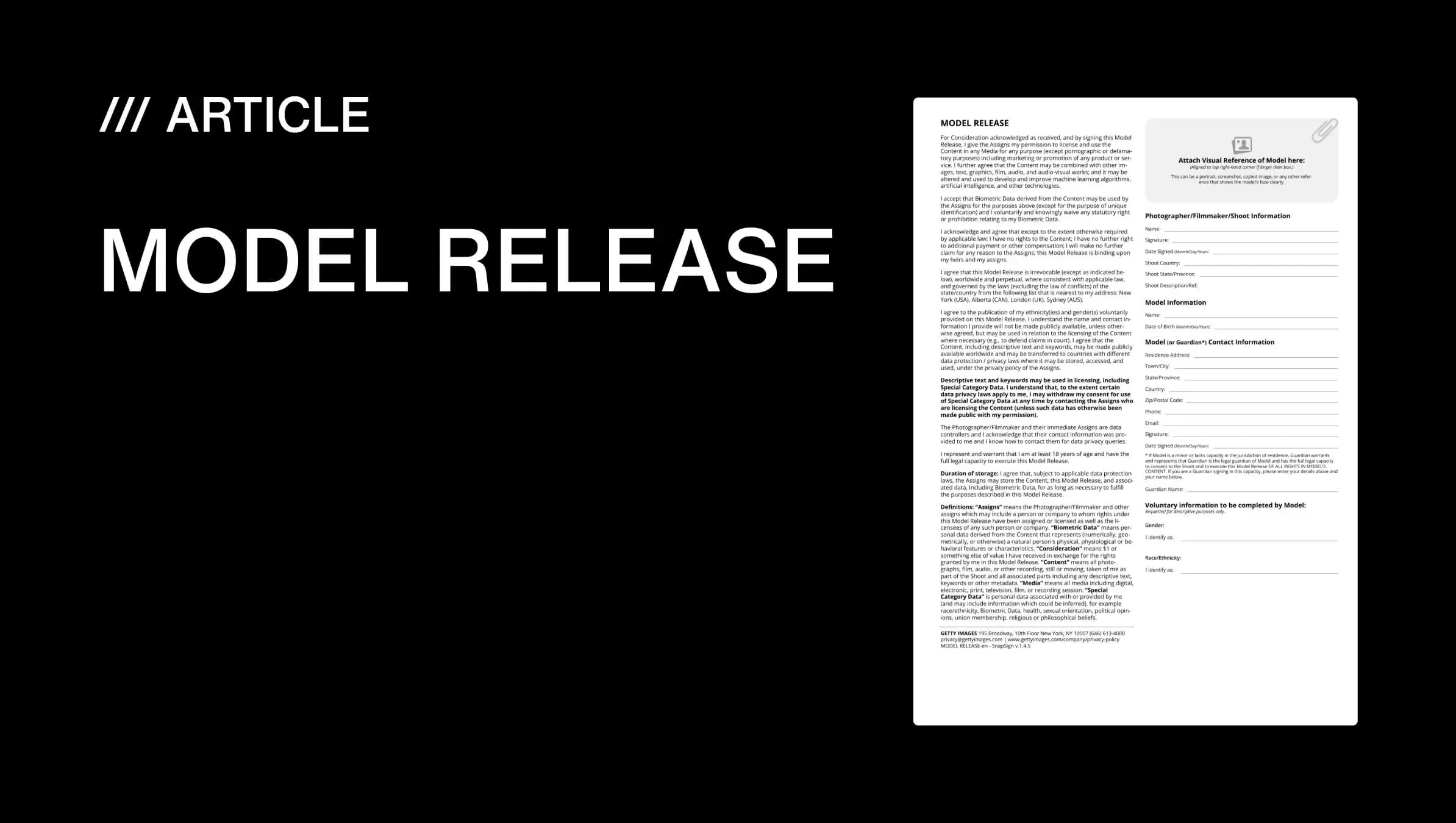
A model release is a signed legal document that grants a photographer permission to use a person's likeness for specific purposes — commercial licensing, advertising, stock photography, or editorial publication. At home, you know the drill. You pull out the form, the model signs, and you move on.
Cross a border and that same document plays by different rules. My first international shoot made that lesson unavoidable. It was in Rome — I handed a crumpled, coffee-stained printout to a street musician near the Pantheon. He signed without reading, winked, and said, "If I get famous, you buy me an espresso." It worked, but only because Italy's personality rights laws hadn't yet caught up with that particular back alley. A few blocks closer to the Spanish Steps and the same casual approach could have gotten the image pulled from every stock platform I submitted to.
I'm Pavel Demidovich, a film photographer and filmmaker. We built SnapSign to solve the model release problem on set and on location — but I've also shot across enough countries to know that the form is only half the equation. The other half is understanding where you're standing when you ask for the signature. This guide walks through what changes at the border: the legal frameworks, the cultural norms, and how to get the release signed without killing the moment. Before we dive into each region, here is the big picture — three legal frameworks that cover nearly every country you will point a camera at.
At a Glance — Three Legal Frameworks
| Framework | Countries | Legal Basis | Release Needed For | Digital Signatures |
|---|---|---|---|---|
| Right of Publicity | US, Canada | State/provincial statutes | Commercial use | Yes — ESIGN, UETA, PIPEDA |
| Data Protection + Personality Rights | EU, UK, Brazil, South Korea, Singapore, Australia | GDPR, LGPD, PIPA, PDPA, Privacy Act | Any use beyond purely personal | Yes — eIDAS (EU), local equivalents |
| Culture-First | Japan, India, China, UAE, Morocco, Ethiopia | Mixed statutes + customary law | Commercial use + cultural permission | Varies — carry paper backup |
What's at Stake When You Get It Wrong
Skip the release in the wrong jurisdiction and the consequences cascade fast. A brand I worked with scrapped an entire Singapore campaign because no one collected sign-offs during the shoot. Weeks of pre-production, gear rentals, crew travel — gone with one email from the legal team. That's the commercial risk. But the legal risk is worse.
In the European Union, publishing someone's photograph without consent is not just a civil matter — it's a data protection violation under GDPR. Fines reach up to €20 million or 4% of global annual turnover, whichever is higher. In France, individuals have successfully sued photographers for using their image without permission even in non-commercial contexts, under the country's robust personality rights laws. In the UAE, photographing someone in public without consent can carry criminal penalties.
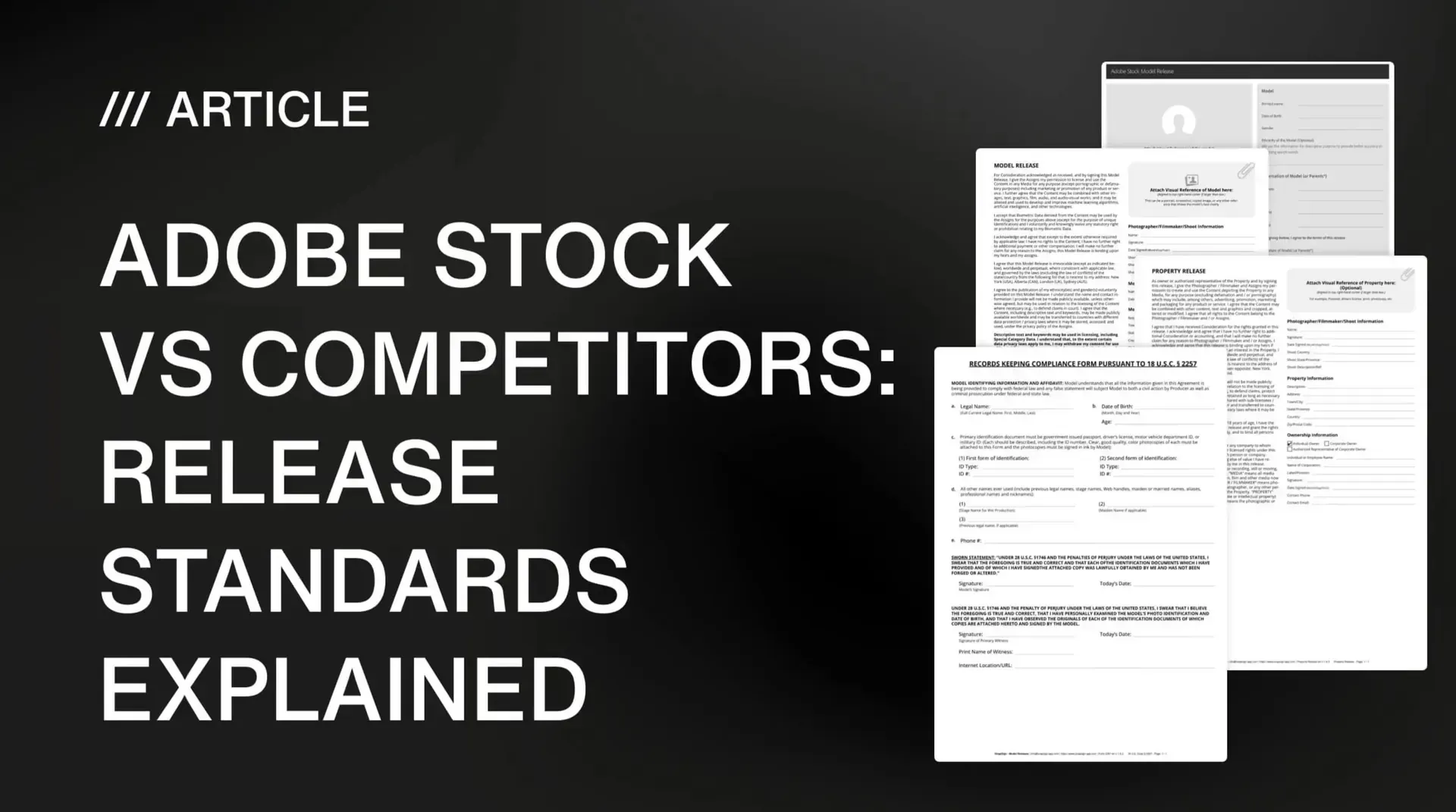
Then there's the stock platform reality. Getty Images, Adobe Stock, and Shutterstock enforce a flat rule: recognizable person, no release, no sale. It does not matter if local law in rural Thailand does not require one — the platform requires it. A single missing signature can lock an entire shoot out of the commercial licensing market.
The takeaway: the cost of not understanding local requirements is not theoretical. It's lost revenue, pulled campaigns, and in some countries, regulatory fines. The good news is that with the right preparation, you can handle releases in any country you shoot in.
Model Release Requirements by Region
The legal frameworks that govern model releases fall into three broad categories: right of publicity systems (US, Canada), data protection and personality rights systems (EU, UK), and culture-first systems where unwritten rules carry more weight than statutes (parts of Asia, the Middle East, and Africa). Here is how each region works in practice.
United States and Canada — Right of Publicity
No federal law in the US requires a model release. Instead, each state has its own right of publicity statute or common law doctrine — and they vary. California and New York give individuals strong control over commercial use of their likeness. Other states are more permissive. For editorial and news use, releases are generally not required anywhere in the US, but stock agencies will still demand one for any image with a recognizable face submitted as commercial.
In Canada, provincial law governs. Quebec's personality rights are among the strongest in North America — even a polite street portrait can be off-limits without written consent if used commercially. With Indigenous communities across both countries, you may need approval from community leadership in addition to individual consent. I once spent an afternoon drinking tea with a village elder in British Columbia who signed for the entire community after we had talked through the project. The tea mattered more than the form.
For photographing minors, both countries require a parent or legal guardian to sign — and some US states require both parents for certain commercial uses.
European Union — GDPR Framework
This is where the rules tighten. Under GDPR, a photograph of an identifiable person is personal data. Before you capture or publish it for anything beyond purely personal use, you need explicit, informed consent. The person must understand what the image will be used for, how long you will retain it, and that they can withdraw consent at any time.
Key takeaway: In the EU, a photo is personal data. No consent = no publication. Fines reach €20 million or 4% of global turnover.
France — Droit à l'Image
France layers its own personality rights on top of GDPR. The "right to one's image" (droit à l'image) means an individual can block publication of their photograph even without commercial use — if the image causes harm or embarrassment. I've had to pull street portraits in Paris that would have been fine in New York. The release needs to be in French, and the subject needs to understand every clause. France is not a country where you skip the paperwork.
Germany — KunstUrhG
Germany's KunstUrhG (Art Copyright Act) gives individuals control over publication of their image. Crowd scenes and public figures get limited exceptions. For everyone else: if they are the main subject and the use is commercial, get a signed release in German. Courts have consistently upheld this. The law is old — 1907 — but enforcement is modern and consistent.
Spain — Explicit Informed Consent
Spain enforces GDPR through the Ley Orgánica de Protección de Datos. Consent must be explicit and informed — a signature alone is not enough if the subject did not understand what they signed. I once turned a tapas lunch into a 45-minute legal seminar walking through each clause of the release. The signature held. But if I had rushed it, the release would have been unenforceable regardless of the ink on the page.
Italy — Codice Civile Personality Rights
Italy's Civil Code gives individuals strong control over their image. Commercial use without written consent in Italian is a fast track to litigation. The Rome street musician who signed my crumpled form near the Pantheon? That worked in a back alley in 2015. Near the Spanish Steps, with a commercial client, the same approach would fail under Italy's current personality-rights enforcement. Get the release in Italian, and give the subject time to read it.
United Kingdom — Post-Brexit Consent
The UK's version of GDPR still applies, but enforcement is handled domestically. The practical advice is similar to the EU: for commercial use, get a signed release. For editorial use in public spaces, you have more room than in France or Germany — but a cautious client will still ask for the form. I shot a café advertisement in London where a background customer who had not signed caused the image to be pulled from the campaign. Blurring the face in post or getting a release before you wrap are your two options. Pick one.
Japan — Privacy Torts and Cultural Expectations
Japan has no specific model release statute, but privacy torts and defamation laws create genuine risk for commercial photographers. A shopkeeper whose face appears in a store display without consent can sue — and win. The cultural expectation is straightforward: you ask before you photograph someone. Skipping this step damages trust even where it is technically legal. I once bowed politely while handing a release form to a shopkeeper in Kyoto. He bowed back, read every line, and declined — firmly but without breaking eye contact. I thanked him and moved on. That interaction, handled correctly, preserved a relationship even though the shot was lost.
India — Cultural Norms Over Legal Requirements
India's legal framework for model releases is relatively loose — there is no federal personality rights statute comparable to GDPR or US publicity laws. But culture fills the gap. In Rajasthan, I learned that photographing women in certain communities requires the approval of community elders, not just the person in the frame. A casual portrait that would raise no legal questions in New York can cause real offense in a rural village. The release form, in these situations, is a gesture of respect — a formal acknowledgment that you are asking, not taking.
On the legal side, India's Digital Personal Data Protection Act (2023) is changing the landscape for photographers who collect and store images of Indian subjects. The law treats photographs as personal data, similar to GDPR, and requires informed consent for collection and processing. If you shoot in India regularly, update your release language to include data processing disclosures.
China — Urban Shoot Restrictions
Commercial photography in Chinese cities is increasingly regulated. My Shanghai production spent more time securing signed releases than actually shooting — security personnel, building management, and local authorities all had questions about what we were doing and whether everyone in the frame had consented. Urban areas enforce stricter rules than rural ones. Corporate clients expect releases for every person appearing in a commercial image, and the paperwork burden is real. Go in expecting it to take twice as long as you think.
Middle East (UAE, Qatar) — Cultural Sensitivity and Legal Risk
In Dubai, photographing women in public without permission can carry legal penalties beyond civil liability — including criminal charges in some circumstances. The same applies in Qatar and Saudi Arabia. Cultural norms around modesty and privacy override standard commercial photography practices. If a subject declines, you do not push. You reschedule, renegotiate, or abandon the shot. The release form here is not just a legal document — it is a signal that you understand and respect local boundaries.
For commercial shoots in the UAE, carry releases in both English and Arabic. Some government entities and local clients will require Arabic-language documentation. A wet-ink signature is still preferred over digital in many situations.
Key takeaway: In the Middle East, photographing without permission is not a civil dispute — it can be a crime. Get consent before you raise the camera. If the answer is no, move on.
Africa — Religious and Community Considerations
Across much of sub-Saharan Africa, model release requirements are governed by a mix of colonial-era legal frameworks and local customary law. In practice, community and religious considerations often override the statutory text. I was told flatly in rural Ethiopia not to photograph a religious ceremony — release or no release. The ceremony was not a public event in the Western sense; it was a private act of worship, and my camera had no place there. Respecting that boundary matters more than any legal analysis.
In Morocco, by contrast, I've had café owners sign without glancing at the form — because we had spent half an hour talking over mint tea. The relationship made the document irrelevant. Across the continent, the pattern repeats: invest time in building trust, and the signature follows naturally.
Key takeaway: In sub-Saharan Africa, community and religious leaders often hold veto power over your shoot. The release form is secondary. Build the relationship first.
Brazil — LGPD and Personality Rights
Brazil's LGPD (Lei Geral de Proteção de Dados) mirrors GDPR in treating photographs as personal data requiring informed consent. On top of that, Brazil's Civil Code gives individuals strong personality rights — an identifiable person can sue for unauthorized commercial use of their image. For street photography during Carnival, you are generally fine; for an ad campaign featuring a samba dancer, you need a signed release in Portuguese. Verbal consent will not hold up in court.
South Korea — PIPA and Commercial Productions
South Korea's Personal Information Protection Act is among Asia's strictest. Commercial shoots — especially for K-pop, fashion, or advertising — require written consent from every identifiable person in the frame. The Korean production culture is used to this: agencies and brands expect releases as standard paperwork. Street photography for personal use is less regulated, but if you ever plan to publish the image commercially, get the release in Korean. Do not rely on verbal agreements.
Australia — Privacy Act and Indigenous Protocols
Australia's Privacy Act treats photographs as personal information when the subject is identifiable. There is no federal personality rights statute, but the Australian Privacy Principles require consent for collection and use of personal data. For commercial photography, a signed release is standard practice. When photographing Aboriginal and Torres Strait Islander communities, additional protocols apply — you need community-level permission, and photographing sacred sites or ceremonies may be prohibited entirely. Australia also has strong defamation laws: a published photo that implies something false about the subject can lead to litigation.
Singapore — Southeast Asia's PDPA and Urban Enforcement
Singapore's Personal Data Protection Act classifies photographs as personal data — consent is required for collection, use, and disclosure. Urban enforcement is tight: security personnel and building management in commercial districts will stop unsanctioned shoots. I watched a brand scrap an entire campaign here because releases were not collected during the shoot. For any commercial work in Singapore, get signed releases from every person who appears in the frame before you leave the location. The paperwork load is real, but people in Singapore are generally familiar with releases — the process is straightforward once you ask.
Country-by-Country Model Release Requirements
| Country / Region | Commercial Release Required | Editorial Without Release | Legal Framework | Cultural Notes |
|---|---|---|---|---|
| United States | Yes | Usually yes | State right of publicity laws | Stock platforms require releases regardless of state law |
| Canada | Yes | Usually yes | Provincial personality rights; Quebec is strictest | Indigenous communities may require leadership approval |
| France | Yes | Rarely | GDPR + droit à l'image (right to one's image) | Even non-commercial use can be challenged |
| Italy | Yes | Limited | GDPR + Codice Civile personality rights | Similar to France; written consent in Italian recommended |
| Germany | Yes | Limited | GDPR + KunstUrhG (Art Copyright Act) | Crowd scenes exempt; main subject requires release |
| Spain | Yes | Limited | GDPR + Ley Orgánica de Protección de Datos | Explicit, informed consent is mandatory |
| United Kingdom | Advised | Yes | UK GDPR + common law | Client preference often stricter than the law |
| Japan | Yes | Sometimes | Privacy torts + defamation law | Ask before photographing — cultural expectation |
| India | Advised | Yes | DPDP Act (2023) — photos as personal data | Community elders' approval matters in rural areas |
| China | Yes | Limited | PIPL (Personal Information Protection Law) | Urban commercial shoots face more scrutiny |
| UAE (Dubai) | Yes | Limited | Federal Decree-Law No. 45 + cultural norms | Women in public — permission required; criminal risk |
| Morocco | Varies | Varies | Mixed civil law + customary practice | Relationship-building often matters more than the form |
| Ethiopia | Varies | Varies | Civil code + customary law | Religious ceremonies may be off-limits entirely |
| Brazil | Yes | Limited | LGPD + Civil Code personality rights | Written release in Portuguese required for commercial use |
| South Korea | Yes | Limited | PIPA (Personal Information Protection Act) | K-pop/fashion/advertising — written consent is standard practice |
| Australia | Yes | Usually yes | Privacy Act 1988 + Australian Privacy Principles | Aboriginal/Torres Strait Islander communities require additional protocols |
| Singapore | Yes | Limited | PDPA — photos as personal data | Urban enforcement tight; get releases before leaving the location |
Digital vs Paper Model Releases for International Work
The tool you use to collect the signature matters almost as much as the legal text. In most of the world, a digital release is faster, more secure, and fully enforceable. In some places, paper still rules. Here is how to handle both.
Where Digital Signatures Are Legally Valid
Electronic signatures are legally recognized across the EU (eIDAS regulation), the United States (ESIGN Act and UETA), Canada (PIPEDA), the UK, Australia, and most of Asia. A release signed on a phone screen in Berlin carries the same legal weight as one signed on paper in Boston. In our app, every signed contract generates a SHA-256 hash for integrity verification — you can prove the document has not been altered, which matters if a dispute arises months or years after the shoot.
We built SnapSign's remote Signature Request feature for exactly this scenario. You send a secure tokenized link to the subject's email — they review and sign on any device, no app install required. The link expires after 48 hours. For international shoots, this turns a lost cause into a five-minute turnaround. Model already left the set? Send the link. Need a signature from someone in the background of a crowd shot? Same process. I used it in Nairobi — a street performer signed on my phone screen while still juggling. The release was stored, hashed, and exportable as a PDF before he finished his set.
Where Paper Is Still Expected
In Vietnam, parts of the Middle East, and some rural regions of South America and Africa, a wet-ink signature on paper carries more weight than a digital one — not because the law says so, but because local officials, clients, and subjects trust what they can hold. In Dubai, some government entities require Arabic-language paper releases for commercial permits. The practical move is to carry both: a digital release app as your primary tool, and a printed backup in the local language for the situations where paper is non-negotiable.
Digital vs Paper Releases — At a Glance
| Aspect | Digital Release | Paper Release |
|---|---|---|
| Legal validity | Recognized in EU, US, UK, Canada, Australia, most of Asia | Recognized everywhere |
| Integrity verification | SHA-256 hash proves no alteration | No built-in verification — relies on physical custody |
| Remote signing | Yes — tokenized email links, any device | No — requires physical presence |
| Multi-language support | App handles translation; signer sees local language | Must carry pre-translated printed forms |
| Storage and retrieval | Cloud-synced, searchable, exportable as PDF/JPG | Physical filing — vulnerable to loss, damage, decay |
| Preferred in | Most Western countries, urban Asia, professional productions | Vietnam, rural Middle East, some government entities in UAE |
| Best for | Fast on-set signing, remote subjects, stock submissions | Regions with low digital trust, local permit applications |
What Photographers Actually Ask About Cross-Border Releases
These are the questions I hear from photographers on set, in forums, and in my inbox. The answers come from real experience — some of it mine, some of it hard-won by photographers who learned the expensive way.
"Do I really need a release for street photography?"
It depends on two things: where you are standing and what you plan to do with the image. In the US, editorial and fine art street photography generally do not require a release — the First Amendment provides broad protection. In France and Italy, the same candid street portrait can trigger a lawsuit if the person is identifiable and the use is commercial. The safe move: if you might ever want to license the image, get the release. If you are shooting purely for your portfolio or a gallery wall, know the local law — and in France, Italy, or Germany, get the release anyway.
"How do I handle the language barrier?"
Our app supports 20 languages for the interface, and you can create Custom Templates with contract text in any language. For in-person signing, I keep a translated summary on my phone — three sentences explaining what the release is and what it permits. In Morocco, that summary plus a genuine conversation over tea got the signature. In Japan, the same approach plus a respectful bow got a polite decline. Both outcomes are fine — what matters is that the subject understood what they were being asked.
"What if someone refuses to sign?"
You thank them and move on. In some cultures, a refusal is final — pushing again damages your reputation and, in places like the UAE, can create legal exposure. In other contexts, a refusal means "not yet." I've had subjects decline on first ask and come back an hour later after talking to a friend. Read the room. The release is not worth burning a relationship or a location over.
"Can I use a single release form everywhere?"
You can, but you should not. A release that holds up in California may be unenforceable in France. Why? It lacks GDPR-mandated disclosures about data retention and the right to withdraw consent. Similarly, a release written for US models will not satisfy UAE commercial permit requirements if it is not in Arabic. We include region-specific clauses in our Default Templates — the GDPR release template adds consent withdrawal language, the US template covers right of publicity, and the Custom Template option lets you build a form tailored to any jurisdiction.
"How long should I keep signed releases?"
Longer than you think. The ASMP recommends keeping releases indefinitely for commercial work — a dispute can arise years after publication. Under GDPR, you should not retain personal data longer than necessary, which creates a tension: keep it long enough to defend a claim, but not so long that you violate data minimization principles. Our approach: retain signed releases for the life of the image's commercial use plus a reasonable buffer. Cloud storage with encryption handles the safekeeping. Paper releases in a filing cabinet do not.
When You Don't Need a Model Release
Not every photograph requires a release. Knowing the exceptions saves time and avoids unnecessary friction on set.
Editorial use. News reporting, documentary work, and educational publication are generally exempt from model release requirements in most countries. If the image informs or educates rather than sells a product, the legal bar is lower. But note: "editorial" has a specific legal meaning. Posting a street portrait on a commercial blog with affiliate links and display ads is not editorial use — it is commercial content, and it needs a release.
Crowd scenes. In Germany, Italy, and the US, images of public gatherings where no individual is singled out typically do not require releases from every person in the frame. A wide shot of a festival crowd is fine; a tight portrait of one festival-goer used in an ad campaign is not.
Public figures. Politicians, performers, and public officials have a reduced expectation of privacy in public spaces. You can generally publish their image without a release for editorial purposes. Commercial use — putting a politician's face on a T-shirt — is a different matter and may trigger right of publicity claims.
Property-only images. If the photograph contains no recognizable people, a model release is not required. A property release may still be needed if the image features private property and the use is commercial.
The rule that overrides all of these exceptions: stock platforms enforce their own standards, which are almost always stricter than local law. Getty Images will reject a crowd shot if a single recognizable face is visible and no release is attached — editorial exemption or not. If you shoot for stock, get the releases. Full stop.
Your Pre-Trip Release Checklist
Before you board the plane, run through these five steps. They take 30 minutes and prevent the kind of problems that take months to untangle.
- Check the legal framework. Is your destination a right-of-publicity country (US, Canada), a GDPR/personality-rights country (EU, UK), or a culture-first jurisdiction (parts of Asia, Middle East, Africa)? The framework tells you what the release needs to say — and in what language.
- Prepare releases in the local language. SnapSign's Custom Templates let you build release text in any language. Even if the subject reads your English form, a translation on hand shows respect and speeds up the conversation. If your app does not support offline mode, also carry a printed backup.
- Research cultural norms for your specific location. Photographing women in public in Dubai is not the same as photographing a street performer in Rome. A 10-minute search on r/photography or a local photography forum will tell you what the statute books won't.
- Know who needs to sign beyond the subject. In Indigenous communities in Canada and Australia, in rural villages in India and Morocco, and at religious sites in Ethiopia, you may need community elders, religious leaders, or both parents — not just the person in front of your lens.
- Plan for the refusal. Decide in advance: if someone says no, do you blur the face in post, reframe the shot, or abandon the image entirely? Having the answer before the moment happens keeps you calm, professional, and legally safe.
Final verdict - International Model Releases
Model release requirements change at the border — sometimes dramatically. The US runs on right of publicity; Europe runs on GDPR and personality rights; much of Asia and the Middle East runs on cultural norms that predate and override the statute books. A digital release app handles the signature logistics in most countries. A printed backup in the local language covers the rest. The common thread across every region I've shot in: the document matters, but the relationship matters more. Ask respectfully, explain clearly, and accept the answer — yes or no. The signature follows the trust, not the other way around.