Do Drone Photographers Need Model and Property Releases?
Yes. Drone photographers need model and property releases when aerial footage captures recognizable people or protected private property intended for commercial use — even from altitude. Flying legally under FAA Part 107 does not grant commercial licensing rights. The airspace permission and the release are separate legal requirements, and stock platforms enforce the second one aggressively.
I learned this distinction the hard way. As a filmmaker, I have spent years navigating model releases on the ground — on film sets, at photo shoots, on crowded festival grounds. Ground-level photography is predictable. You see the person. You hand them the iPad. They sign. But the first time I sent a drone up over a coastal resort for a commercial project, I realized how much I had taken that predictability for granted. From 200 feet up, I could not tell who was in the frame. The beach looked empty through the controller screen. Back in the edit, cropped in at full resolution — there were a dozen identifiable people. None of them had signed a model release.
Drone photography has exploded. Real estate agents fly drones over luxury listings. Travel creators capture resorts, coastlines, mountains. Wedding filmmakers pull aerial establishing shots of venues packed with guests. What started as a niche hobby now fuels entire businesses — from solo operators to full-scale commercial drone photography studios. But while the creative barrier to aerial content has collapsed, the legal framework around it has not kept pace in most pilots’ workflows. Stock platforms — Adobe Stock, Getty Images, Shutterstock — have tightened moderation dramatically. AI systems now scan aerial footage for faces, logos, license plates, and branded architecture. What passed moderation a few years ago gets rejected instantly.
The gap is this: the drone industry talks endlessly about FAA compliance — how to get a commercial drone license, passing the Part 107 drone license exam, understanding drone flying rules. Entire forums are dedicated to how to become a drone pilot, earn a drone pilot license, or pass the Part 107 drone license exam. Nobody talks about model releases and property releases.
This guide does not explain how to pass the Part 107 exam. It explains what happens after you already have your footage — when you want to license it commercially. That is the step most drone pilots skip, and it is the step stock platforms enforce aggressively. This article covers when aerial content needs a release, what each platform actually requires, and how to collect signatures when you never meet the property owner in person.
Why Drone Photography Creates Unique Release Problems
Ground photographers control their frame. Before pressing the shutter, they see the person, assess recognizability, and decide whether to pull a release. Drone photographers control almost nothing below them. You launch intending to capture a coastline, a skyline, a resort exterior — and the sensor records everything in a quarter-mile radius. People on balconies. Sunbathers on private rooftops. License plates in parking lots. Children in backyards.
This is not a hypothetical edge case. Modern consumer drones shoot 48-megapixel stills and 4K video with digital zoom. A face that looks like a speck on the controller screen becomes clearly identifiable in the exported file. Stock platform moderators review the exported file, not your controller preview.
Three things make drone releases uniquely difficult:
You did not intend to capture the person. In ground photography, including someone is usually a conscious choice. With a drone, identifiable people appear in your frame without you ever knowing they were there. The law does not care about your intent — it cares about whether the person is recognizable in the commercial output.
You cannot walk over and ask for a signature. The person is on a balcony 400 feet below you, or on a boat moving through the frame, or inside a gated property you cannot access. The traditional “here, sign this” workflow does not work when you never meet the subject.
Property owners do not know they were photographed. A homeowner whose rooftop pool appears in your stock footage may never see the image — but if they do, and if the image was licensed commercially for a tourism campaign, the legal exposure is real. Property releases exist specifically for this scenario.
The solution is not to stop flying. It is to build release awareness into your pre-flight and post-flight workflow — the same way you check drone flying rules, airspace restrictions, and battery levels. Drone photography regulations cover where you can fly. Drone photography legal requirements cover what you can sell. Master both, and your commercial work is protected from every angle.
When You Need a Model Release for Aerial Photography
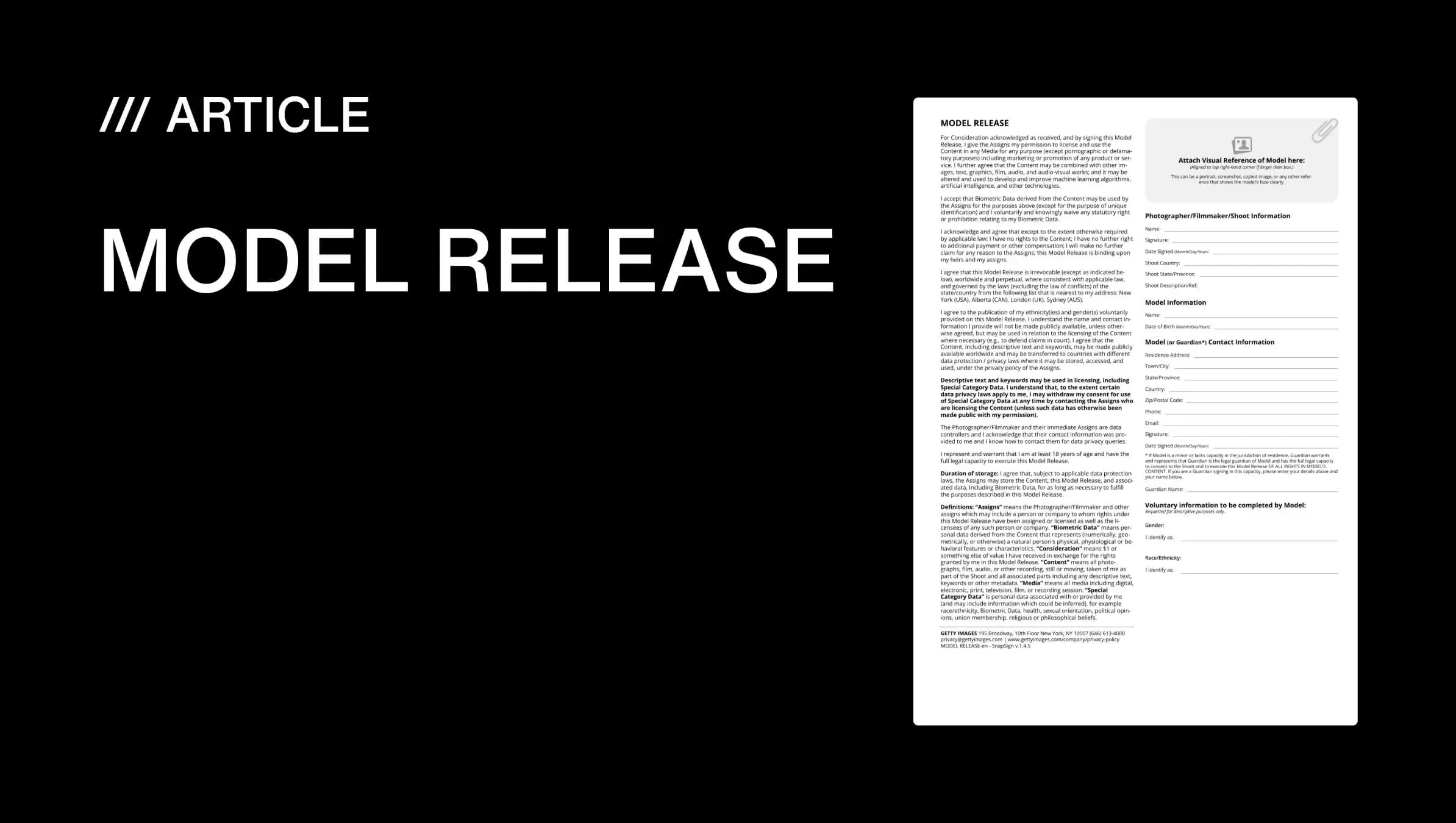
A model release is a signed agreement from a recognizable person granting permission to use their likeness commercially — sometimes called drone photography consent in aerial contexts. The standard for recognizability in drone photography is not “can you see their face clearly from 400 feet.” It is “could this person, or someone who knows them, reasonably identify them in the final image.”
Recognizable Individuals From Altitude
People become identifiable in aerial footage through more than just their face. Clothing — a distinctive jacket, a uniform, a wedding dress. Vehicles — a unique car, a boat with visible registration numbers. Location — the only person on a private stretch of beach, a homeowner in their own garden. Body language and context — a yoga pose on a rooftop, two people embracing on a balcony. Tattoos visible through zoom.
If you crop into an aerial photo at 100% and can describe the person well enough that someone who knows them would recognize them, you need a release. Stock platform moderators apply this standard daily — and they apply it more strictly to drone content than to ground-level photography because the privacy expectation is different. People on beaches and in backyards have a reasonable expectation that they are not being photographed for commercial stock licensing.
Distance matters but does not guarantee anonymity. A wide coastal shot with three people walking on a beach half a mile away — those specks in a landscape are probably fine. But the same people at 100 feet, with recognizable silhouettes and clothing, the only figures on an empty beach — that crosses the recognizability threshold. When in doubt, mark it editorial or get the release.
Children and Minors in Aerial Shots
Photographing children from a drone introduces an additional legal layer. If a minor is identifiable in your aerial footage, most stock agencies require a guardian-signed minor model release — no exceptions. Agencies rarely give contributors the benefit of the doubt when minors are involved. The safest practice is to avoid flying over areas where children are likely to be present — playgrounds, school grounds, family resort pools — when shooting for commercial stock.
Private Events and Gatherings
Aerial footage of weddings, private parties, rooftop events, and corporate retreats almost always requires releases if used commercially. Attendees at a private event have a reasonable expectation of limited exposure — they did not consent to appear in a stock photo licensed for advertising. Wedding filmmakers who deliver aerial footage directly to the couple are on safer ground than those who submit the same footage to a stock platform. The distinction is between work-for-hire — the couple’s private video — and commercial licensing, where anyone can buy and use the clip.
Public events sit in a different category. A music festival filmed from above with thousands of attendees — the crowd-as-texture is editorial by nature, and no individual has a reasonable expectation of privacy. But if you zoom in on one festivalgoer dancing alone and that person is recognizable, the editorial defense weakens. Wide crowd shot = editorial. Recognizable individual = release.
When You Need a Property Release for Drone Footage
A property release — sometimes called a property release form — grants permission to commercially use images of recognizable private property. Drone photographers often assume that shooting from public airspace eliminates the need for property releases. It does not. Airspace law governs where you can fly. Drone commercial licensing law governs what you can sell. These are separate domains.
Properties That Typically Need Releases
Luxury homes are the most common rejection trigger. A distinctive mansion, a cliffside villa, a private estate — if the property is the main subject of the image and recognizable as a specific private residence, stock platforms will ask for a property release. Hotels and resorts present a similar challenge. Many explicitly prohibit commercial aerial photography in their terms, and stock agencies increasingly flag resort footage because property owners file takedown complaints.
Distinctive architecture creates a separate category. Buildings that are unique enough to be identified — Frank Gehry structures, iconic museums, famous stadiums — may be protected by trademark or architectural copyright. Some landmarks have dedicated rights management teams that monitor stock platforms for unauthorized commercial use.
Drone Real Estate Photography and Property Releases
Real estate drone photography for property listings sits in a gray area. If you are hired by a real estate agent to shoot a home and the images are used only for that listing, the agent’s listing agreement with the homeowner typically covers promotional use of the property’s image. But if you later submit that same aerial footage to a stock platform, you need a separate property release signed by the homeowner. The listing agreement covers marketing the home for sale — it does not cover perpetual commercial stock licensing of the property’s image. Once the home sells, the listing agreement expires with it. Reach out to the former owner if you want to license the footage — but expect a no. Most homeowners are not comfortable with their private residence becoming stock imagery.
Hotels, Resorts, and Commercial Properties
Travel content creators encounter this constantly. You book a room at a resort, fly your drone over the property at sunrise, capture stunning footage of the pools, restaurants, and beachfront — and then discover that the resort’s commercial photography policy prohibits licensing that footage on stock platforms. Some resorts allow personal drone use for social media but draw a hard line at commercial stock submission. Permission for Instagram is not permission for Adobe Stock. Always check the property’s photography policy before flying. The front desk may not know the answer — email the marketing or legal department and get commercial permission in writing, separately from any social media permission.
The Drone Pilot's Release Checklist — A Drone Photography Legal Checklist
Professional aerial creators build release awareness into every phase of the shoot. Here is a practical workflow that doubles as a drone photography legal checklist — run through it before every commercial flight.
Before the Flight
Confirm FAA airspace authorization for the location. Check for temporary flight restrictions. Identify whether the shoot area contains private residences, resorts, or distinctive architecture that may require property releases. If shooting for commercial stock, scout the location on foot first — note where people congregate, where children might be present, and which properties dominate the visual field from altitude.
During the Flight
Monitor the live feed for identifiable individuals. If people appear in the frame, note the timestamp and decide whether the shot is usable without releases or should be flagged for editorial-only licensing. Watch for license plates, branded umbrellas, distinctive vehicles, and signage — AI moderation catches these. If you see a child in the frame, reposition. The shot is not worth the liability.
After the Flight
Review footage at full resolution before submitting to any stock platform. Zoom into crowded areas. Check balcony railings, pool decks, and beach sections. Ask: can anyone identify themselves? Does private property dominate the composition? Would this shot work as editorial if commercial is too risky? Flag any clip that needs a release and do not submit it until the release is signed.
This review adds ten minutes to your workflow. It prevents weeks of back-and-forth with stock platform moderators — whether you are submitting drone photos for real estate, travel editorial, or commercial aerial filming drone work. The drone photography rules are simple: review before you submit.
Drone Release Decision Matrix
When you are in the field, you need a quick answer. Here is a practical reference for the most common drone photography scenarios.
| Scenario | Model release needed | Property release needed | Editorial safe |
|---|---|---|---|
| Empty beach, no people | No | No | Yes |
| Luxury villa — main subject | No | Yes | Yes |
| Wedding — guests visible | Yes | Often | Yes |
| Resort pools — guests visible | Yes | Yes | Limited |
| Public skyline — no dominant building | No | No | Yes |
| Music festival crowd | No | No | Yes |
| Playground — children present | Yes | Case by case | Limited |
This matrix covers the most common scenarios. For edge cases, apply the recognizability test: if someone could identify themselves or their property in your footage intended for commercial use, collect the release.
Commercial vs Editorial Drone Content
Whether you run a drone photography business, offer drone photography services to real estate agents, or shoot aerial footage for your own stock portfolio — commercial intent determines which releases you need.
| Factor | Commercial | Editorial |
|---|---|---|
| Purpose | Advertising, marketing, promotion | News, documentary, education |
| Model release required | Yes, for all recognizable people | Not always — varies by jurisdiction |
| Property release required | Yes, for recognizable private property | Generally no, with exceptions |
| Stock platform acceptance | Strict — releases checked on every submission | Moderate — releases not always required |
| Examples | Real estate ads, tourism campaigns, hotel promotions | News coverage, documentary B-roll, cultural documentation |
| Legal risk if no release | High — lawsuits, takedowns, stock account suspension | Lower — but privacy laws still apply in some countries |
When Editorial Labeling Is Not a Loophole
Marking drone footage as “editorial” on a stock platform does not automatically shield you from legal exposure. Some countries — particularly in Europe under GDPR — enforce strong privacy protections even for editorial content. Aerial privacy law is evolving as drone adoption grows: what was tolerated five years ago may now trigger takedown requests or legal claims. A person photographed from a drone over a French beach has privacy rights that editorial labeling does not override. Know the laws where you fly.
How Stock Platforms Handle Drone Content
Stock platform moderation for aerial content has shifted from human review to AI-assisted scanning. The practical effect: details that human moderators used to miss are now flagged automatically. For drone stock photography and aerial stock photography, this means every submission faces AI scrutiny before a human moderator ever sees it.
| Platform | Drone release policy | Common rejection triggers |
|---|---|---|
| Adobe Stock | Model and property releases required for commercial aerial content. Official guidelines specify the recognizability standard. | Missing property releases for luxury homes, identifiable people in wide aerial shots |
| Getty Images | Strictest of the major platforms. Requires releases for all recognizable people and private property in commercial content. Contributor guidelines detail aerial-specific requirements. | Unreleased resorts, recognizable architecture, any identifiable person regardless of distance |
| Shutterstock | Requires releases for commercial aerial content. Editorial aerial footage accepted without releases but with usage restrictions. Content rejection guidelines cover common aerial triggers. | AI-detected faces and logos in wide shots, unreleased private property, resort exteriors |
The pattern across all three platforms is consistent: if your drone footage will be licensed commercially, collect releases before submission. The rejections come during moderation, not after licensing — but a pattern of rejections can flag your contributor account.
One important distinction worth noting: not all platforms offer an editorial safety net. Envato Market, for example, does not offer editorial licenses at all — if your drone footage contains recognizable people or private property without releases, Envato simply will not accept it. Adobe Stock, Getty Images, and Shutterstock do accept editorial submissions, but editorial licensing limits your revenue to a fraction of what commercial licensing commands.
When You Don't Need a Release
No recognizable individuals in the frame. No private property as the main subject. Public spaces photographed from public airspace — coastlines, forests, mountain ranges, city skylines where no single building dominates — these generally do not require releases. Editorial use labeled correctly and not repurposed for advertising. Work-for-hire footage delivered directly to a client for their private use — a wedding video, a private real estate listing, a corporate internal video.
The key word in all of these exceptions is “generally.” Laws vary by country, and platform enforcement varies over time. When in doubt, collect the release. A signed release is cheap insurance against a rejected submission — or worse, a legal demand letter six months after the footage was licensed.
Digital Release Workflow for Drone Pilots
Drone photography creates a specific logistical problem that paper releases handle poorly. You are rarely standing next to the property owner. You photograph a villa from 300 feet up, land your drone on a public road half a mile away, and never set foot on the property. How do you get a signature?
This is exactly the problem we built SnapSign’s remote signing to solve. Here is the workflow that works for drone pilots:
Before the shoot, prepare the release. Open the app, select the Property Release template, fill in the property details and shoot information. Save it as a Draft.
Send the Signature Request remotely. Enter the property owner’s email address, add a brief personal message explaining what you photographed and how the images will be used, and send. The owner receives an email with a secure tokenized link. They open it on their phone, review the release, add any missing property details, and sign — no app install required. The link is valid for 48 hours, and after signing, the owner can view the completed document for 30 minutes.
You get the signed release automatically. When the property owner signs, the Contract status changes to Signed, the PDF is generated, and you can export it immediately. Every signed Contract is cryptographically hashed with SHA-256 — you can verify that the release has not been altered since signing, which matters when a stock platform audits your submissions.
For multi-location shoots — a real estate photographer covering five luxury listings in one afternoon, or a drone photography services company managing shoots across an entire metro area — Group Events let you send releases to all property owners from a single event, track who has signed, and export all signed releases together once every owner has completed their form.
The traditional alternative is emailing a PDF, hoping the owner prints it, signs it, scans it, and emails it back. Template-based form builders offer downloadable release form PDFs — but that still leaves you chasing signatures through email threads. In practice, property owners open that PDF, think “I’ll do this later,” and never return to it. A mobile-first signing flow — tap to open, review, sign, done — closes that gap.
Final verdict - Drone Photography Releases
FAA Part 107 covers where and how you fly. Model and property releases cover what you can sell. Mixing up those two things is the most expensive mistake a commercial drone pilot can make. The good news is that building release collection into your workflow adds minutes per shoot — and a digital signing tool means you can collect those signatures without ever handing someone a clipboard. Fly legally, review your footage at full resolution, collect releases before submitting to stock platforms, and your aerial portfolio stays both creative and protected.