What Happens When a Model Signs Without Looking
I will never forget one shoot in a cramped studio — cables everywhere, a softbox leaning because the stand had lost a knob, the client pacing like we were about to miss a train. I slid a model release toward the model. She was fixing her lipstick, barely glanced at the paper, signed it upside down, and flicked it back at me like she was signing for a food delivery.
And I thought: easy. But experience has smacked me around enough to know — easy does not always mean safe. If things went south, she would not be the one getting frantic calls. That heat lands on the photographer.
The truth is, most models sign releases without reading them. They trust the photographer. They trust the process. They want to keep the shoot moving. And in a world where a signed model release can put someone’s face on a billboard, a stock platform, or a brand campaign for years — that blind trust is a problem for everyone involved.
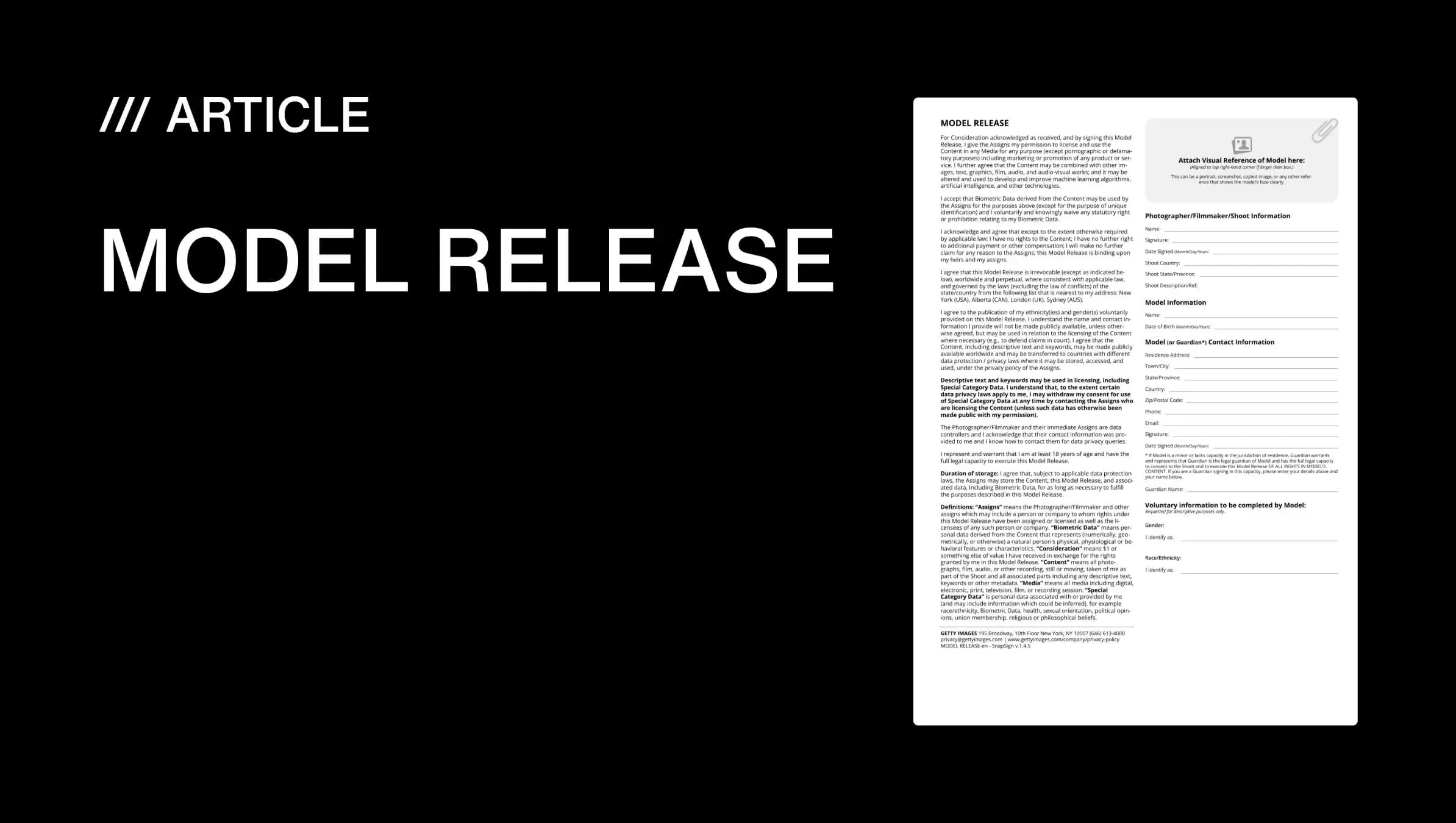
A model release is a contract that says: “You can use my face, here are the terms.” Simple in concept, but the consequences of signing one without understanding it can follow both the model and the photographer for years. This article is for both sides of that exchange — because I have been on set enough times to know that the photographer who explains the release is the photographer who gets called back.
What Is a Model Release — and What Does It Actually Say?
A model release is a legal document that gives the photographer permission to use a person’s likeness for specific purposes. It does not transfer copyright — the photographer already owns the image the moment they press the shutter. What the release transfers is the right to use the person’s face, body, and likeness commercially. Without it, the photographer has a photo they cannot license, publish in an ad, or submit to a stock platform.
Here is what a signed model release actually covers — and what it does not:
| What a release covers | What a release does NOT cover |
|---|---|
| Permission to use the model's likeness in the specified ways | Copyright ownership of the photo — that stays with the photographer |
| Commercial, editorial, or promotional usage rights as defined | Permission to use the images in ways NOT listed in the release |
| Duration and territory of usage | Automatic payment beyond what the release specifies |
| Model's acknowledgment of the terms | A work contract, payment terms, or shoot logistics |
| Legal protection for the photographer against right-of-publicity claims | Protection for the model against misuse — that requires reading before signing |
A standard model release form typically covers four things:
- Who — the model’s legal name and the photographer or studio name.
- What — a description of the shoot and the images covered by the release.
- How — the scope of use. Commercial, editorial, promotional, all media, specific platforms. This is the part most models never read and most photographers never explain.
- How long and where — duration (perpetual or time-limited) and territory (local, national, worldwide).
The ASMP — American Society of Media Photographers has a great piece on this: “Would You Sign This?” It walks through a model release clause by clause from the subject’s perspective. The conclusion: most releases are reasonable, but the ones that are not — the ones with hidden perpetuity clauses, unlimited third-party transfer rights, or vague “any purpose whatsoever” language — are landmines. And the model never sees them coming because they never read the form.
If you are a photographer asking yourself “should I sign a model release form?” — the question is usually directed at the model, but the photographer needs to understand the answer just as deeply. Because when a model asks what they are signing, and you cannot explain it clearly, trust evaporates.
Five Reasons Models Sign Without Reading
After enough shoots, you start to recognize the patterns. Here is why that form gets signed upside down, every time:
Blind trust. A model once told me, “You are the pro, you know what you are doing.” It was meant as a compliment. It landed as a warning. Trust is earned, and a signature given without understanding is not trust — it is a gamble.
Set chaos. When assistants are tripping over sandbags, strobes are overheating, and the client is whispering directions in your ear, a piece of paper looks like background clutter. The model signs to keep the circus moving. The problem is, that piece of paper defines how their face will be used for the next decade.
Legal jargon. I once told a model, “This clause means forever.” She laughed and said, “Cool, forever young then,” and signed. She thought I was joking. I was not. Legal language is designed for precision, not readability — and most people’s eyes glaze over by the third line.
Adrenaline. First shoots are electric. The lights, the attention, the energy — paperwork feels like the boring part nobody wants to slow down for. But the boring part is the only part that holds up in court.
Autopilot. Professional models sign so many releases they could do it with coffee in one hand and a pen in the other. And sometimes they do. Muscle memory replaces reading comprehension, and a release that grants worldwide perpetual rights gets the same glance as a lunch receipt.
Here is the thing: none of these reasons make the model irresponsible. They make them human. The responsibility to bridge the gap — between a confusing legal document and a person who just wants to do their job — sits with the photographer. Here is what each reason demands from you:
| Why they sign without reading | What the photographer should do |
|---|---|
| Blind trust | Earn it. Explain the release clearly — a model who understands is a model who trusts you more, not less. |
| Set chaos | Make the release part of call time, not an afterthought. Signed before the first light is set. |
| Legal jargon | Translate every clause into plain language. If you cannot explain it over coffee, rewrite it. |
| Adrenaline | Do the paperwork before the energy peaks. Pre-shoot, not mid-shoot. |
| Autopilot | Never assume a pro has read it. Even a model on their hundredth shoot deserves the ninety-second walkthrough. |
For more on what dangerous clauses actually look like, see our guide to red flags in model releases.
What Happens When a Release Comes Back to Haunt You
I had a friend — a seriously talented fashion photographer — skip the release once. Licensed an image, thought everything was clean. Then the model saw herself plastered across a campaign she never approved. She went legal. He went broke. I ended up buying him beers just to calm him down while he recalculated his life. What should have been lens money became lawyer money.
That is the photographer’s side. The model’s side is just as brutal. I have seen a model’s face end up on a political ad she despised. She called it career suicide, and she was not exaggerating. Another friend discovered his image was being used to sell a dodgy energy drink. He did not earn a cent. He did not even know the campaign existed until a friend sent him a photo of a billboard.
These are not hypotheticals. They happen because someone signed a piece of paper they did not read, and someone else decided not to explain what it said.
Perpetuity is the word that catches most people off guard. I once joked with a model: “Imagine I still use this shot when you are eighty, sitting on your balcony knitting.” She laughed — then froze when I told her that is literally what perpetuity means. The photo of you at twenty-two promoting a brand campaign, still circulating when you are eighty. That is not a horror story. That is standard language in most commercial releases.
The Digital Photography School guide on model releases puts it plainly: a release is not just permission — it is the document that defines the boundaries of that permission. If the boundaries are not clear, the permission is not either. For a step-by-step walkthrough of what belongs in a release and why, the Institute of Photography’s guide to understanding model releases covers the practical mechanics — from who needs to sign to what happens if you skip it.
What We Owe Each Other on Set
I used to be lazy about this. Slide the form across and pray nobody asked questions. These days, I slow down — even if the client is sighing like we are wasting daylight.
Read before signing is not just advice for models. It is advice for photographers who hand over a form they have not read themselves. If you cannot explain every clause in your own release in plain language, you should not be asking anyone to sign it. Take ten minutes, read your own form, and highlight the three sections that matter most: usage scope, duration, and third-party rights. Those are the ones models ask about — and the ones that cause disputes when they are vague.
Explain it like you are talking over coffee. I point at the key sections and say: “This part means I can use the photos in my portfolio and for commercial work. This part says how long — usually forever, which is standard. This part is your copy for your records. If anything feels off, tell me and we will adjust it.” That conversation takes ninety seconds. It builds more trust than a flawless lighting setup.
Here is the script. It fits on an index card and works on every shoot:
1. What this is. “This is a model release. It gives me permission to use the photos from today.”
2. How they will be used. “I will use them for [portfolio / commercial work / stock — be specific]. If that changes, I will check with you first.”
3. How long. “The permission is [perpetual / two years / this campaign only]. Perpetual is standard — it means I do not need to come back and ask again.”
4. Who sees them. “They will appear on [my website / Instagram / stock platforms / the client’s campaign]. You will know where your face is showing up.”
5. Your copy. “I will send you a PDF after the shoot. Keep it. If you ever have a question about where your images ended up, that PDF has the answer.”
6. Questions. “Any part of that you want me to explain differently? Anything you want to limit? Now is the time — once we sign, the terms are locked in.”
That is ninety seconds. Six sentences. If the model hesitates on any of them, talk it through. If they ask for a restriction and it does not break your intended use, say yes. A release signed with understanding is worth ten signed in blind trust.
Encourage questions, even the weird ones. A model once asked if her photos might end up on a dating app. Odd question, but that was her genuine worry. I told her no, and she signed with visible relief. Another model asked if I could limit usage to web-only for two years. I agreed — it did not affect my intended use, and she walked away feeling protected.
Share copies immediately. After the shoot, I send a PDF of the signed release. It is a five-minute task that saves five months of grief if questions come up later. The model has proof of what they agreed to, and I have a backup that is not crumpled in a gear bag.
A model told me once: “You are the first photographer who explained this properly.” Guess who got the callback for her next big job. The release conversation is not a legal formality. It is a relationship builder. And relationships get you hired again.
For the fundamentals of how releases fit into a wider legal workflow, start with our model release guide.
How I Handle Releases on Set
Over time, I have built a workflow that makes the process smoother for everyone — model, client, and future-me who might need to find a specific release two years later.
Timing. Before makeup, before the first light is set, before patience runs thin. The release is part of call time, not an afterthought at wrap.
Language. If I cannot explain a clause over a cup of tea, it is too complicated. I have rewritten my release twice to make it shorter and clearer. Less paper means a higher chance someone actually reads it.
Backups. My iPad died mid-sign once. Never again. Now I carry paper copies folded in my Pelican case and SnapSign on my phone. Two backups, zero excuses.
Digital storage. A signed release stuffed in a drawer might as well not exist. Every signed release goes into cloud storage, tagged with the model’s name and shoot date. When a client asks for proof of a release from a shoot three years ago, I find it in under a minute.
Always share copies. I send the PDF after every shoot with a short thank-you note. Models appreciate it, clients respect it, and the version I store is the same version the model has.
Ethics: The Photographers Who Ruin It for Everyone
Every industry has its sharks. I have seen photographers sneak tiny-print clauses into releases — perpetual worldwide rights buried in paragraph seven, third-party transfer language that lets them resell images to anyone for anything. One photographer pulled that and got blacklisted so thoroughly I have not heard his name since.
The photography world is smaller than you think. Burn a bridge over a shady release, and you are done. Word travels through makeup artists, stylists, studio managers, and models faster than any portfolio ever could. The photographers who last are the ones who treat the release as a tool for clarity, not a weapon for exploitation.
A release should protect both people in the room. If the document you are handing someone feels like a trap, rewrite it. If you would not sign your own release if the roles were reversed, fix it.
Here is the checklist I run on set — five questions, thirty seconds, zero disputes:
| Before you hand over the release | Done |
|---|---|
| Can you explain every clause in plain language? | ☐ |
| Did you tell them what the images will be used for? | ☐ |
| Did they ask questions — and did you answer them without rushing? | ☐ |
| Did you send them a copy the same day? | ☐ |
| If the roles were reversed, would you sign this release yourself? | ☐ |
Explain. Answer questions. Share a copy. That is the whole formula. A model who signs with understanding is a model who works with you again — and in a small industry, that is the only currency that compounds.
Final verdict - Sign With Understanding, Not Blind Trust
Models sign releases without reading because they trust us, they are distracted, or they just do not get the fine print. None of that gives photographers an excuse to exploit the gap.
The release conversation takes ninety seconds. Explain the key clauses in plain language. Answer the weird questions. Share a copy after the shoot. Store it somewhere you cannot lose it. These are not complicated habits — they are just habits most photographers never build.
I have botched this before. I have watched friends botch it. I have seen careers wobble from one sloppy signature. Now I explain, I carry backups, I share copies. It is not rocket science — it is respect. And in an industry where your reputation is your reel, respect is the only thing that gets you called back.