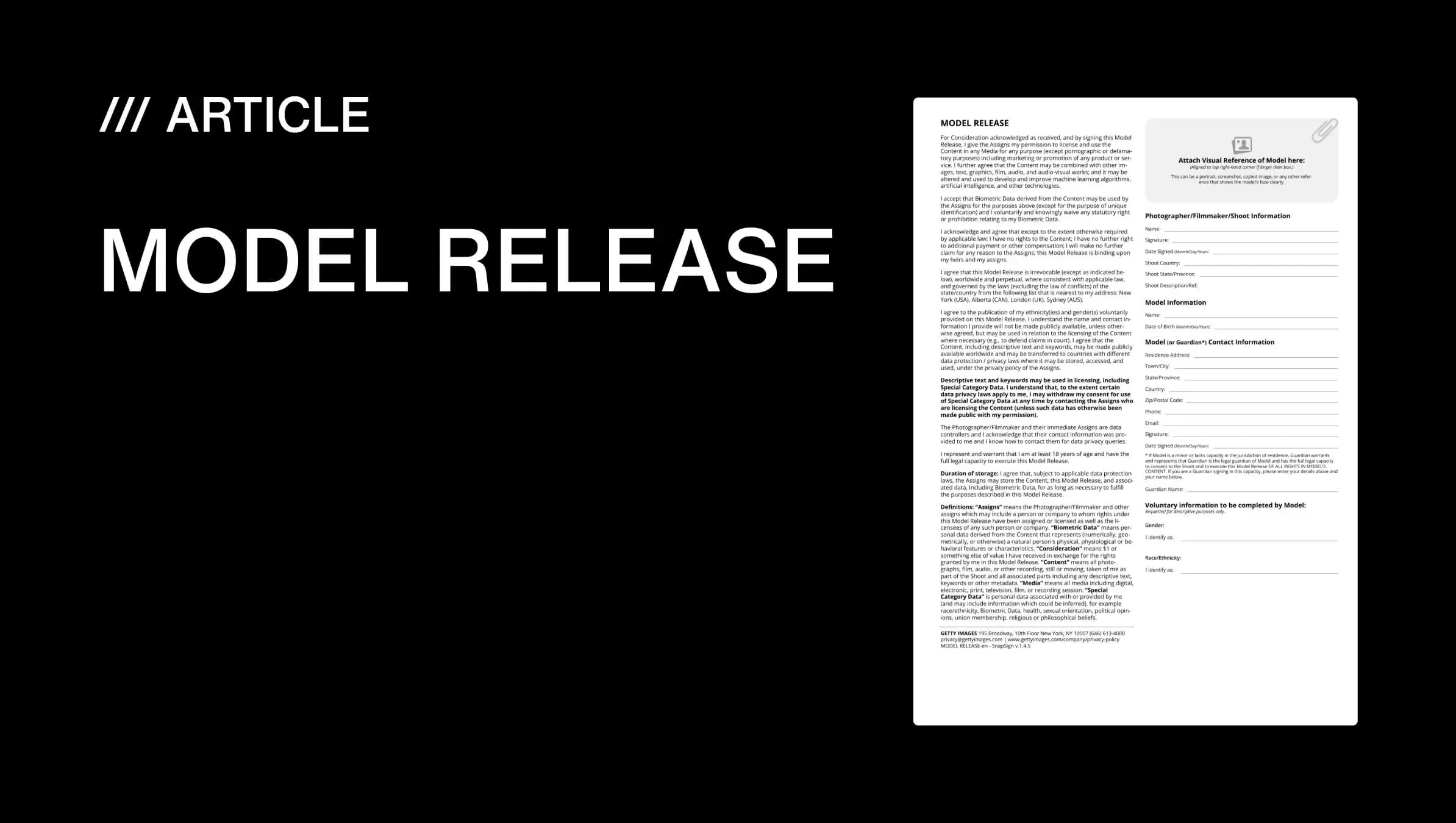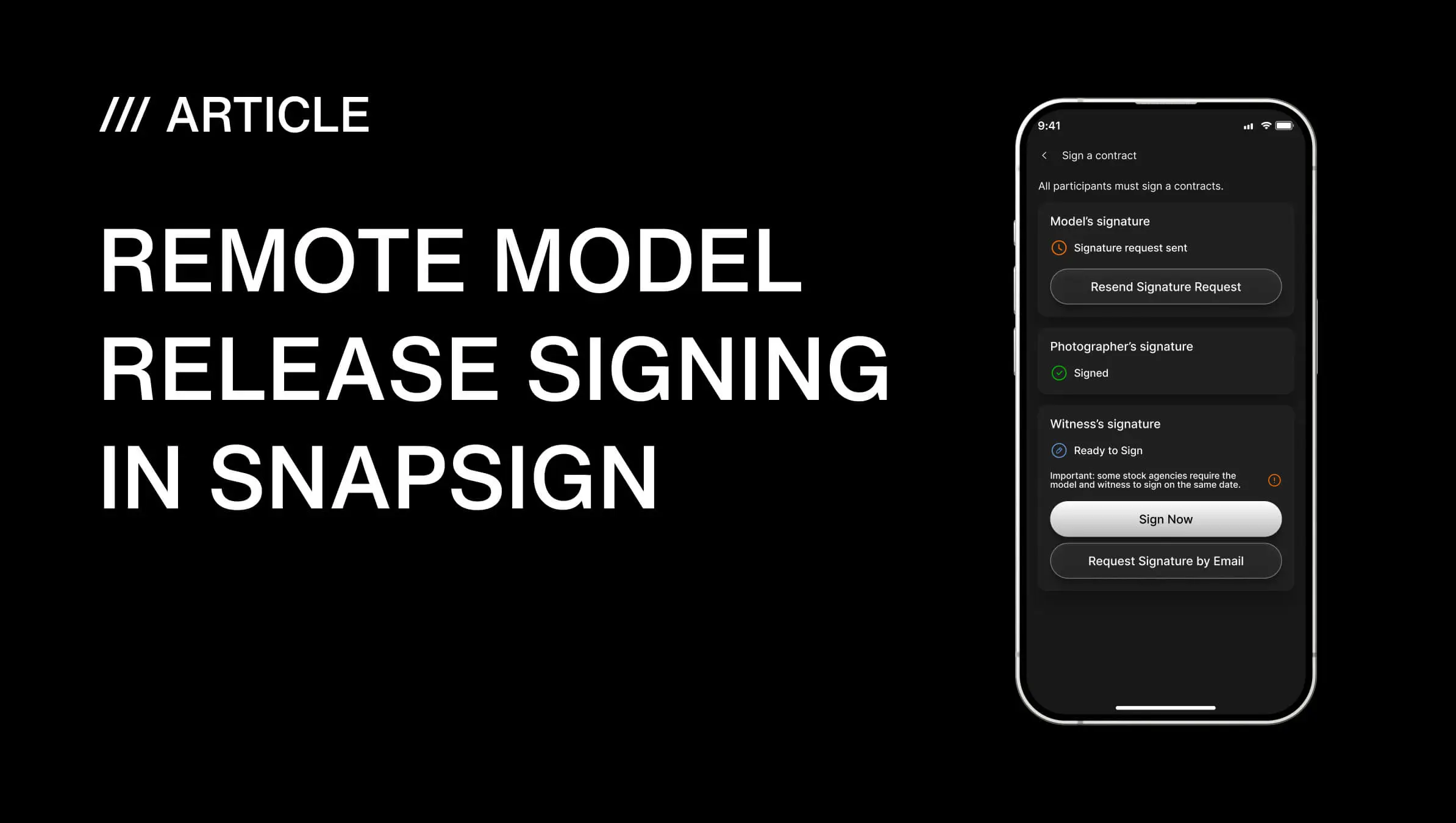
Do You Need a Model Release for Street Photography? The Short Answer
No — you do not need a model release for editorial street photography taken in a public space. But the equation changes fundamentally when the image is used commercially: for advertising, stock licensing, brand campaigns, or any context where the image promotes a product rather than tells a story. In those cases, a signed release is generally required — not universally, and not in every jurisdiction, but as a practical matter, commercial use without consent carries real legal exposure.
I learned this distinction the hard way. Years ago, I shot a portrait of a street performer in Melbourne — natural light, medium format film, the kind of frame you chase for months. A travel magazine picked it up for an ad spread. Gorgeous layout. I slept well for exactly one reason: I had tracked down the performer afterward and gotten a signed model release. Without that piece of paper — or, these days, a digital consent form on a phone — I would have been staring at a lawsuit instead of a publication credit.
Most street photography consent questions spiral into confusion because photographers conflate two things: what is legal to shoot and what is legal to publish commercially. In most countries, photographing people in public is legal — that is your street photography rights in a nutshell. But do you need permission for street photography once the image is used to advertise or sell? Generally yes — and that is where a model release becomes the practical answer. The street photography legal landscape is actually simpler than most photographers assume, once you separate the act of shooting from the act of licensing.
This article walks through the exact line between editorial and commercial use, how to get consent from a stranger without killing the spontaneity of the moment, what street photography laws and public photography regulations require across different countries, what changes when you photograph events instead of streets, and the exceptions where no release is needed.
Editorial vs. Commercial: The Only Distinction That Matters
The entire street photography model release question collapses into one distinction: editorial versus commercial use. Understand this, and you understand 90% of what you need to know. It is the same framework that governs whether model release street photography rules apply — and they almost always come down to how the image is used, not where it was taken.
Editorial use means the image illustrates a story, an opinion, or a piece of journalism. Newspapers, documentary films, blog posts, gallery exhibitions, and fine art books all fall under editorial use. You are informing or expressing — not selling. A street photograph of a commuter on a rainy train platform, published in a photo essay about urban life, is editorial. No model release needed.
Commercial use means the image promotes something: a product, a service, a brand, a political campaign, or a commercial transaction. A stock photo listed for license on Getty Images — even if it is the same rainy commuter shot — is commercial. The moment money changes hands for the use of the image to sell something else, you need a signed release from every identifiable person in the frame.
| Scenario | Editorial or Commercial? | Model Release Required? |
|---|---|---|
| Street portrait in a photobook | Editorial | No |
| Same portrait licensed on Adobe Stock | Commercial | Yes |
| Event photo in a news article | Editorial | No |
| Event photo on a sponsor's banner | Commercial | Yes |
| Candid street shot on your blog | Editorial | No |
| Candid street shot in a clothing ad | Commercial | Yes |
This distinction is not a loophole or a gray area — it is the framework that courts, stock platforms, and publishers use. For commercial licensing, major stock platforms generally require a release for every recognizable person. Editorial submissions are reviewed under separate rules — they may not require releases, but they also earn a fraction of what commercial-licensed images earn. Stock platforms increasingly use automated and human review to detect recognizable people, logos, and other clearance issues. These platforms are not being cautious — they are applying the same editorial-vs-commercial distinction that governs the entire industry.
What trips up most street photographers is the edge case: an image shot for a personal project that later gets licensed. You take a photograph for yourself — editorial intent — and two years later a brand wants to license it for a campaign. Intent at the moment of capture does not matter. What matters is how the image is used. If you cannot go back and get that street subject's signature, you cannot license the image commercially. Plan for this. Get consent when you can, even if you do not have a commercial use in mind yet.
Street Photography Release: At a Glance
| Use | Release Usually Needed? | Notes |
|---|---|---|
| Personal portfolio / website | Usually no | Depends on jurisdiction |
| Gallery exhibition | Often no | Expressive use, not advertising |
| Photobook | Often no | Country-specific |
| News / editorial publication | Usually no | Must genuinely be editorial |
| Stock — commercial license | Yes | Release generally required |
| Brand advertisement | Yes | High right-of-publicity risk |
| Paid social media sponsorship | Usually yes | FTC disclosure + right of publicity |
When Street Photography Crosses Into Commercial Territory
Knowing the rule is one thing. Recognizing when you have crossed the line is another — and street photographers cross it in ways easy to miss until a lawyer points them out. The candid photography legal landscape shifts the moment intent changes from art to commerce. And the hardest question is the one photographers ask least: do I need a model release for commercial street photography? For advertising, stock licensing, endorsements, and brand campaigns involving a recognizable person, the practical answer is generally yes — the word "commercial" is right there in the question.
The most common trap: selling prints. Selling a street photograph as a fine-art print is often treated as expressive use rather than advertising — but it is not automatically exempt in every jurisdiction. If a corporation buys that same print to hang in a hotel lobby as part of their brand experience, the context shifts. Can you sell street photography without a release? As art, often yes. As commercial stock, generally no. You as the photographer may not be liable, but the buyer might be — and a buyer who gets burned will not come back. Smart photographers disclose whether a release exists at the point of sale and let the buyer decide. On r/photography, the top-voted answer to this question is blunt: in the US, public property shots need no release — for editorial use. The thread has over 150 comments from photographers wrestling with exactly this edge case, and the consensus is clear: sell the print as art, not as ad stock.
Another trap: social media. Posting a street photograph on Instagram is editorial — you are sharing your work. But if you are an influencer and the post is part of a paid brand partnership, that photograph is now commercial content. The FTC requires disclosure of paid partnerships, and a subject who sees their face in what is effectively an ad has grounds for a right of publicity claim, even if you shot the image in a public park.
Stock photography is the clearest case. Every major stock platform requires a model release for images depicting recognizable people used commercially. Can you make money from street photography on these platforms? Only if you have releases. You can mark an image as "editorial only" on some platforms, which exempts it from the release requirement — but editorial-only images earn a fraction of what commercial-licensed images do, because most stock buyers are buying for commercial use. How to make money from street photography is not a creative question — it is a paperwork question. Without releases, your earning ceiling is a print sale. With releases, the same image can earn through stock licensing, brand campaigns, and commercial syndication. There is no shortcut.
One more scenario worth flagging: street portraits of vulnerable subjects. Photographing a person experiencing homelessness, someone in obvious distress, or a child without a parent present raises ethical questions that go beyond the legal framework. A model release from a parent or guardian is legally required for minors — but even with adults, the question should not just be "can I publish this?" but "should I?" Street photography privacy laws vary by jurisdiction, but ethics are universal: some of the best street photographs in history were taken without consent, and the debate about that tension is not settled. My own rule: if I would feel uncomfortable showing the subject the photo I just took, I do not publish it.
But the hardest scenarios are not the legal edge cases. They are the human ones — the stranger who notices the camera, walks over, and demands to know what you are doing. A Reddit thread titled "Had my first street photography confrontation today. Really sad" captured this experience perfectly — over a thousand comments from photographers who have been yelled at, followed, or had the police called on them while doing nothing illegal. The legal answer is: you are in the right. In a public space, you can photograph. But being legally right does not make the confrontation less awful — and it does not get you a signed release. Which brings us to the skill that matters more than any legal distinction: how to actually get consent from a stranger.
How to Get Consent Without Killing the Candid Moment
Every street photographer knows the tension: the best images happen when people forget the camera is there. Walking up afterward with a clipboard and a legal form feels like the fastest way to break whatever trust the photograph just captured. This is what makes how to do street photography without being creepy one of the most searched questions in the genre — and the answer is simpler than most photographers think. Get consent, be transparent, and the interaction shifts from invasive to collaborative.
The approach depends on what just happened. If the subject noticed you — they looked at the lens, smiled, engaged — you already have an opening. Walk up, show them the shot on your screen, and tell them honestly what you might do with it. "That light was incredible — I shoot street photography and occasionally license images for editorial use. Would you be open to signing a quick digital consent form? It takes under a minute, I can send it to your phone right now." Most people say yes — not because they are legally minded, but because you treated them like a collaborator instead of a subject.
If the subject did not notice you — a candid moment, someone lost in thought, a split-second gesture — the calculation changes. Interrupting someone to ask for consent retroactively can feel invasive in a way the photograph itself was not. In these cases, I carry a small stack of business-sized cards with a QR code that links to a brief page explaining who I am, what I shoot, and how to reach me. If someone does notice and approaches me, I hand them the card. It does not replace a model release, but it creates a channel — and channels lead to conversations, and conversations lead to consent.
A Consent Script That Works
"Hi — I'm a street photographer. I just captured a photo of you that I really like. I may use it in my portfolio or license it later. May I show it to you and send you a short release explaining exactly how it could be used?" Short, honest, no pressure. Most people say yes — not because they love paperwork, but because you treated them like a person, not a subject.
Before You Publish: A Quick Checklist
- Is the person recognizable?
- Is the use editorial, expressive, or commercial?
- Could the image imply endorsement of a product or brand?
- Was it taken where privacy was reasonably expected?
- Does local law require consent?
- Do you have a signed release?
The best tool in this situation is a digital model release app that lets you send a release to someone's phone in seconds. No paper, no clipboard, no app install required for the signer. You open the app, enter a name and email, and the release lands in their inbox — they review, sign, and you both move on. The whole interaction takes less time than explaining why you need a signature in the first place. I have used this on sidewalks, in parks, at markets, and outside concert venues. The friction is low enough that a digital photography consent form becomes a natural part of the workflow rather than a dealbreaker.
Now — knowing how to get consent solves the practical problem. But the legal framework that governs whether you actually need that consent changes the moment you cross a border. Before you pack your gear for a trip abroad, you need to understand which side of the line each country stands on.
Public Photography Laws Around the World
Every country draws the line between public photography and individual privacy differently. What is legal on a street corner in New York can land you in court in Paris. If you travel with a camera, you need to know which side of the line you are standing on.
In the United States, the First Amendment provides broad protection for photography in public spaces. You can photograph anyone in a public place where there is no reasonable expectation of privacy — streets, parks, plazas, transit stations. The legal complication arises not from the act of photographing but from the commercial use of the resulting image. The right of publicity — a person's right to control the commercial use of their likeness — varies by state. California and New York have strong right-of-publicity statutes. Other states have weaker or no explicit protection. The takeaway: shooting is protected; selling the image commercially without consent is not. Public photography laws in the US are fundamentally permissive — the restrictions kick in at the point of use, not the point of capture.
In the European Union, the balance tilts sharply toward individual privacy. The General Data Protection Regulation treats a photograph of a person as personal data — and collecting personal data requires a lawful basis. Public interest and legitimate interest can justify street photography without consent, but the bar is higher than in the US. France and Germany are particularly strict: in France, Article 9 of the Civil Code protects the right to one's image, and courts have ruled that publishing a street photograph where the subject is clearly identifiable can violate their privacy — even if the use is editorial. In Germany, the KunstUrhG (Art Copyright Act) allows photographs of people in public only under specific conditions, and the subject can revoke consent if the publication harms their legitimate interests.
Before You Shoot Abroad
Research local personality rights and public photography laws before you travel. France, Germany, Japan, and South Korea have stricter privacy protections than the US or UK. In some jurisdictions, even editorial street photography of a clearly identifiable subject requires consent. The ASMP and local photography associations maintain country-specific legal guides — consult them before you pack your gear.
The United Kingdom sits somewhere in between. There is no general right to privacy in public under UK law, and street photography is widely practiced. But the UK's implementation of GDPR, combined with the Human Rights Act, means that publishing a photograph that causes distress or intrudes on someone's private life can expose you to legal risk — even if the image was taken in public. The practical advice from UK photography bodies: be reasonable, be respectful, and if someone objects to being photographed, do not push it.
On r/photography, a thread about legal concerns for street photography in Europe and Japan drew 53 comments from photographers sharing country-specific experiences — the recurring theme was that US photographers consistently underestimate how much stricter European privacy laws are until they face a cease-and-desist letter. The thread is worth reading in full before an international trip.
No single street photography law governs every country — each jurisdiction balances free expression and privacy differently. For a deeper dive into how model release requirements differ across legal systems, see our guide on cultural and legal differences in model releases around the world.
Country-by-country laws cover the street. But there is another context where the release rules shift entirely — and it is where a lot of working photographers earn their living: events.
Event Photography and Model Releases: A Different Rulebook
Event photography sits somewhere between street photography and studio work — you are on private property or in a controlled venue, photographing people who are not professional models but who paid to be there. The core question is the same as on the street: do you need a model release for event photography? The answer depends on who hired you and how the images will be used. An event photography model release works the same way as any other release — what changes is who is responsible for obtaining it.
The single most useful thing you can do before shooting an event: read the ticket terms. Many events — concerts, conferences, festivals, sporting events — print a clause on the ticket or at the entrance stating that attendance implies consent to be photographed or filmed. This language exists to protect the event organizer and, by extension, the photographers the organizer hires. If you are the official event photographer, these terms are your first line of defense. But they are not bulletproof — a subject who is singled out in a close-up and used in an ad campaign can still bring a claim, ticket terms or not.
If you are shooting an event independently — you bought a ticket and brought your camera — those terms almost certainly do not cover you. The consent on the ticket is between the attendee and the organizer. Unless you have a separate agreement with the organizer, you are just a person with a camera in a crowd, and publishing those images commercially puts you in the same position as any other street photographer: you need a model release.
Group events — workshops, fashion shows, film sets, multi-day productions — add another layer of complexity. You might have a dozen or more participants, each needing their own photography release form for events. Tracking paper forms across a chaotic shoot day turns into its own job, which is exactly the problem we built SnapSign Group Events to solve. Instead of chasing signatures one by one, you create a roster, send Invitation Links before the shoot or share a QR code on set, and every participant signs from their own phone. By the time you wrap, your releases are done — signed, timestamped, and stored.
| Event Type | Release Typically Needed? | Who Provides It? |
|---|---|---|
| Concert (wide crowd shots) | No — ticket terms usually cover this | Event organizer |
| Concert (isolated close-up of fan) | Yes — for commercial use | Photographer |
| Conference or trade show | Usually covered by registration terms | Event organizer |
| Wedding (guests) | No — for portfolio use. Yes — for stock or advertising | Photographer (if commercial) |
| Fashion show / runway | Yes — models are working, release is standard | Designer or agency |
| Film set / production | Yes — every cast and crew member | Production company |
The pattern is consistent: if you are hired by the organizer, the organizer's terms and your contract with them cover most scenarios. If you are shooting independently and plan to use the images commercially, the burden of getting releases falls entirely on you. In either case, event photography consent and model release for events procedures should be written into your contract before you arrive on site — fixing a consent gap after the fact is exponentially harder than preventing one.
When You Don't Need a Model Release
For every rule, there is an exception — and knowing when you do not need a release is as valuable as knowing when you do.
Editorial use in public spaces. As covered, this is the foundational exemption. News reporting, documentary work, fine art, personal portfolios, photobooks, and blog posts do not require releases — as long as the image is not used to sell or promote a product, service, or brand. This covers the vast majority of street photography.
Images where people are not identifiable. A silhouette, a figure seen from behind, a face obscured by shadow or motion blur — if a reasonable person cannot identify the subject, no release is needed. The test is not whether you know who it is, but whether an ordinary viewer would recognize the person. This is why crowd shots and wide urban scenes rarely require releases: the individual dissolves into the context.
Public figures in public places. Photographs of politicians, celebrities, and public officials taken in public spaces enjoy broader editorial protection — but the line still sharpens fast if the image is used commercially. A photo of a senator at a rally can run in a newspaper without a release. That same photo cannot be licensed to a bank for a credit card ad without one. Public figure status expands editorial freedom; it does not grant commercial license.
Property that is not the primary subject. If you photograph a street scene that happens to include a recognizable building, you generally do not need a property release — unless the building is the clear focus and the image is used commercially. A skyline shot is editorial. A tight architectural study of the Flatiron Building licensed for a real estate campaign is commercial and may need a property release. The same distinction that governs people governs buildings: context of use is everything.
None of these exceptions override the core rule: the moment an image is used to advertise, promote, or imply endorsement, release requirements become much more likely. Selling the image itself as art may be treated differently. When in doubt about whether your use requires consent, err on the side of getting the signature. A signed photo consent form takes minutes to collect and years of liability off the table.
Now that you know the rules, the exceptions, and how to navigate the human side of getting consent, the last question is practical: what tool do you actually use to get that signature — and does it work on a street corner as well as it does in a studio?
Digital Releases for Street and Event Work
The traditional answer to model releases — print the form, carry a clipboard, hope the pen works — makes sense in a studio. On a street corner or in a crowded event hall, it is absurd. You cannot hand a clipboard to a stranger whose candid portrait you just took and expect anything but a confused stare. The tool has to match the context, and the context of street photography is speed, spontaneity, and minimal friction.
This is where digital releases earn their place. We built SnapSign to solve exactly this problem: a model release form that lives on your phone, opens in seconds, and can be signed on the spot — or sent remotely if the subject prefers to review it later. Whether you call it a photo release form, a photography model release form, or a photography permission form, the job is the same: get legally binding consent in under two minutes. For street photographers, the workflow looks like this: capture the image, approach the subject, show them the shot, open the app, hand them the phone to sign with a finger, and the signed PDF is ready. The entire interaction takes less time than explaining what a model release is.
For event photographers, the workflow shifts from one-to-one to one-to-many. Instead of chasing signatures across a venue, you create a Group Event, build a roster of participants, and send Signature Requests. Participants sign on any device — no app install required — and every completed release is stored and accessible to both parties. For a deeper look at the event workflow, see our SnapSign Group Events guide.
| Approach | Best For | Friction Level | Legal Strength |
|---|---|---|---|
| Paper release (clipboard) | Studio shoots, planned sessions | High — printing, carrying, scanning later | Moderate — no digital audit trail |
| Digital release — in-person signing | Street photography, candid portraits | Low — phone-to-phone, under 2 minutes | Strong — timestamps, device metadata |
| Digital release — remote Signature Request | Events, groups, follow-up after the shoot | Low — email link, no app for signer | Strongest — full audit trail, cryptographic hash |
The legal foundation is the same regardless of format. In the US, the ESIGN Act and UETA establish that electronic signatures carry the same weight as ink on paper. In the EU, the eIDAS regulation provides the equivalent framework. Digital releases are not a shortcut around legal requirements — they are the same legal instrument, delivered through a tool that actually fits how photographers work outside a studio.
Final verdict - Street Photography Model Releases
You generally do not need a model release for street photography when the image is used editorially — personal work, photobooks, galleries, journalism. The line tightens when the image promotes a product, brand, or service. That distinction — editorial versus commercial — answers more questions than any country-by-country statute, because it is the common thread running through every legal framework. Street photographers who stay in the editorial lane can shoot with confidence. For commercial use involving recognizable people, consent is the practical default.
The photographers who get burned are not the ones who do not know the rule. They are the ones who know it and assume the edge case will not find them. Plan for the image you might license, not just the one you are taking. Carry a digital release tool. Ask for consent when you can. No shot is worth the legal exposure of using someone's likeness in a context they never agreed to.
Legal Disclaimer
Photography, privacy, and image-rights laws vary by jurisdiction and may change. This article is general information based on the author's experience as a working photographer — it is not legal advice. Consult a qualified attorney for decisions about your specific work, especially for commercial licensing, international publication, or images involving minors.