Quick answer — what model release fines actually cost
Documented court awards and settlements for model release violations range from approximately $15,000 to $16 million, depending on jurisdiction, the specific facts of each case, applicable law, and the nature of the violation. These are not hypothetical numbers — every figure in this guide comes from a real, verified legal case where a photographer or brand used someone's image without proper permission. Small violations settle in the low thousands. Cases involving implied endorsement, sensitive content, or commercial misuse without any release at all regularly cross six figures. One page of paperwork — a properly filled-out photography model release form signed before the shoot — is all that stands between you and a lawsuit that could wipe out your business.
This guide walks through nine real legal cases, the legal principles that make photographers liable, the fine ranges courts actually impose, and exactly what a model release form needs to include to protect you. If you photograph people for money — or plan to — the cases below are what happens when you skip the paperwork.
But before the dollar amounts, you need to understand the patterns. Every lawsuit in the next section falls into one of four buckets. Once you see the buckets, you will start noticing them in your own workflow.
Why photographers get sued — the four patterns that show up in every case
After spending years building SnapSign and talking to photographers about their release workflows, I have noticed that model release lawsuits almost never come from exotic legal theories. They follow four predictable patterns. If you know the patterns, you can avoid them.
1. Using photos beyond what the release allows
The release says "social media only." The client uses the image on product packaging, magazine ads, and a national billboard. The model sees their face on a store shelf and calls a lawyer. Courts overwhelmingly side with the model because the release defines the boundary — and the client stepped over it. The photographer is usually named in the suit because the model's contract is with the photographer, not the end client.
This is not a theoretical scenario. A photographer on r/photography described exactly this situation: a model release that explicitly prohibited commercial use. The subject downloaded the watermarked image, cropped out the watermark, added their company logo, and posted it — commercial use in everything but the paperwork. The photographer had done everything right. The release was specific. But enforcement meant sending a demand letter to someone they otherwise had a great working relationship with. The top comment in that thread — 44 upvotes from working photographers — put it simply: "They're not a client, they're a model. I think a polite note treating it as an accident is the way forward." The second-highest pushed back: "This is too soft. You should at least cover the commercial use — something obviously discussed that they chose not to buy." That tension — between preserving relationships and protecting rights — is exactly where most model release disputes live.
2. Using images with no release at all
TFP portraits, event photos, casual headshots — if the image later gets used commercially and no model release exists, the model can demand removal, compensation, and damages. They almost always win because the law starts from the default position that you need permission. Not having a release is not a gray area — it is a losing position.
3. Implying endorsement without consent
A face next to a slogan. A portrait in a product advertisement. Even subtle visual associations can trigger a right of publicity claim — and right of publicity violations produce some of the most expensive judgments in photography law. The model does not need to prove financial harm. The unauthorized commercial association is the harm.
4. Continuing to use photos after consent ends
An employee leaves the company. A model's contract term expires. The images stay up on the website, in brochures, in email campaigns. In the EU, this is a GDPR violation — ongoing use of personal data without ongoing consent. Even in the US, post-employment use of someone's likeness without authorization is a fast track to a demand letter.
Every case in the next section falls into one of these four buckets. The dollar amounts change. The pattern stays the same.
Nine real cases of model release fines and compensation
These are not urban legends or scare tactics. Every case below is documented in court records, legal analyses, or news reporting. The dollar figures are what courts awarded or what plaintiffs demanded in verified legal claims.
| Case | Violation | Amount | Lesson |
|---|---|---|---|
| Campaign expansion | Usage exceeded release terms — more ads, more formats, broader distribution | $150,000 | Define scope explicitly: platforms, territories, campaign types, duration |
| Nude image commercialization | Artistic nude used in paid ad without commercial release | $100,000 | Sensitive content demands the strictest release language |
| Cher implied endorsement | Magazine design implied celebrity endorsement without consent | $325,000+ | Right of publicity claims carry the highest penalties |
| Single unauthorized photo | Real estate website used one image without permission | $25,000 | One photo is enough — traffic and views are irrelevant to liability |
| Ex-employee photos (Germany) | Company kept using ex-employee images in marketing — GDPR violation | €10,000 | Employee releases need explicit time limits and revocation terms |
| Unlicensed Getty image (UK) | Business used a Getty image without licensing — settlement plus legal costs | £1,953 + fees | Legal costs multiply the base settlement — small violations become expensive |
| Celebrity beach photo (France) | Photograph taken on private beach without consent — French privacy law | Undisclosed settlement | France enforces among the strictest image-rights laws in the world |
| Campaign shot, no release | Commercial campaign shot without securing a model release form | $15,000 demand | Even small-budget shoots produce five-figure legal threats |
| Vanessa Bryant crash photos | Officials shared graphic crash-site photos — privacy and dignity violation | $16,000,000 | Unauthorized image use — even non-commercial — can produce catastrophic judgments |
Sources: Mark Roesler's image-rights damages archive covers the campaign-expansion, nude-image, and Cher endorsement cases. The $25,000 statutory damages case was analyzed in an attorney breakdown of single-image infringement demands. The German ex-employee case was documented by FGvW law firm's GDPR and personality rights analysis. The UK Getty settlement was reported by Pinsent Masons. The French beach-photo case was detailed by UGGC Avocats' image-rights practice. The Vanessa Bryant verdict was covered by Axios in both the trial reporting and settlement updates.
One pattern cuts across all nine cases: the absence of a clear, properly scoped model release form turned an ordinary commercial activity into a legal liability. In several cases, a release existed — but it was too vague to hold up.
What these cases teach about model release form requirements
Reading through these cases, the lesson is not "release good, no release bad." It is more specific than that. A model release form that says "I give permission to use my image" is barely better than no release at all. Courts want specificity.
A model release that holds up under legal scrutiny needs to address five things:
- Scope of use. Commercial, editorial, internal — or all three. Ambiguity here is the single most common failure point in the cases above.
- Platforms and media. Web, print, billboards, packaging, social media, email marketing. If the release says "social media" and the image ends up on a billboard, the release does not protect you.
- Territory. United States only, worldwide, or specific regions. GDPR and EU privacy laws make territory-specific language essential for anyone whose work crosses borders.
- Duration. Perpetual, time-limited, or campaign-specific. The campaign-expansion case above — $150,000 — happened because the release had no duration limit but also no expansion permission. The ambiguity cost six figures.
- Revocation terms. Irrevocable, revocable with notice, or subject to specific conditions. In the EU, GDPR gives models a right to withdraw consent — your release needs to address what happens if they exercise it.
Stock platforms reinforce this with their own requirements. Getty Images requires releases to specify usage rights, territory, and duration. Adobe Stock's model release guidelines include similar specificity requirements — and will reject releases that leave these dimensions ambiguous. When I built SnapSign's templates, I made sure every default photography model release form covers all five dimensions. Not because lawyers enjoy reading fine print — because ambiguity is the most expensive word in a model release.
Knowing what a release needs is half the equation. The other half is knowing what happens when the release is missing or weak — because the dollar amount a court assigns depends on which of these five dimensions was violated and how badly. Here is how the actual judgments stack up.
Typical fine ranges — what courts actually award
Based on the cases above and broader image-rights litigation patterns, model release violation penalties fall into four tiers:
| Violation tier | Typical range | What it covers | Real example |
|---|---|---|---|
| Small | $500–$3,000 | Unauthorized use on a small website, single social media post, limited reach | Unlicensed Getty image — £1,953 settlement |
| Moderate | $5,000–$30,000 | Commercial use without release, exceeding scope on small-to-medium campaigns | Single unauthorized photo — $25,000; Campaign without release — $15,000 demand |
| Severe | $50,000–$500,000+ | Implied endorsement, sensitive content misuse, large-scale commercial exploitation | Campaign expansion — $150,000; Nude commercialization — $100,000; Cher endorsement — $325,000 |
| Extreme | $1,000,000–$16,000,000+ | Privacy violations, dignity harm, cases with punitive damages | Vanessa Bryant crash photos — $16,000,000 |
One thing that surprises photographers: the size of the violation does not always determine the size of the judgment. A single photo on a real estate website cost $25,000. A single TFP portrait used without a release generated a $15,000 demand. The math is brutal — one missing signature on one model release form can cost more than a year's income from photography.
How a missing release turns into a lawsuit — the risk pathway
Every case in the table above followed the same trajectory. Understanding the pathway makes the risk tangible — and makes prevention obvious.
| Stage | What happens | Cost at this stage |
|---|---|---|
| 1. The shoot | Release is missing, vague, or never collected | $0 — the risk is invisible |
| 2. The campaign | Image is published commercially — ad, packaging, social media promotion | $0 — still invisible |
| 3. The discovery | Model or subject sees their image in a commercial context they did not approve | $0 — but the clock is now ticking |
| 4. The lawyer | Subject retains counsel. A demand letter arrives — typically seeking compensation, removal, and damages | Legal fees begin immediately for both sides |
| 5. The settlement or judgment | Case resolves through settlement, statutory damages, or court award — often years after the original shoot | $15,000–$16,000,000 depending on jurisdiction and facts |
Every case in this guide reached stage 5. None of them had to. The absurd part: the fix for stage 1 — a signed model release form — takes under two minutes and costs nothing. Here is what each missing piece of a release actually exposes you to.
| Missing or weak | Typical consequence | Real case reference |
|---|---|---|
| No release at all | Full liability for any commercial use — removal, damages, legal fees | $15,000 demand — campaign shot without release |
| Scope undefined | Expansion lawsuit — usage beyond what either party assumed was permitted | $150,000 — campaign expansion beyond release terms |
| No witness signature | Platform rejection — Getty, Adobe Stock, Shutterstock require witnessed releases | Rejected stock submission, lost licensing revenue |
| Duration unspecified | Continued use dispute — model objects years later, release terms are ambiguous | Ex-employee photos — €10,000 GDPR case |
| Territory not defined | GDPR or local privacy law exposure — EU rights differ fundamentally from US law | French beach photo — privacy rights violation |
| No digital archive / no hash | Cannot prove the release existed or was not altered — factual dispute undermines legal defense | Any case where the release is contested years after signing |
Numbers like these are why photographers show up in forums asking the same questions, over and over. Not because they are careless — because the consequences feel abstract until someone puts a dollar figure next to a real scenario. Here are the questions I hear most often.
How photographers ask about model release fines — real questions from forums and conversations
Over the years, I have seen the same questions come up in photography communities, on Reddit, and in conversations with SnapSign users. These are not hypotheticals — they are the questions photographers ask when they realize how much is at stake.
"Do I really need a model release for every shoot?"
If the images will ever be used commercially — to promote a business, sell a product, license to a brand, or run as an ad — yes. Every single time. The cases above show that "I thought we had a verbal agreement" does not hold up in court. Personal portfolio use is generally safer, but the line between portfolio and commercial blurs fast once money enters the picture. If you are unsure whether your shoot crosses that line, the answer is to get the release — it takes two minutes with a digital model release app and removes the ambiguity entirely.
"What if the model was my friend and the shoot was casual?"
Friendships do not survive six-figure lawsuits. Several cases in the table above started as casual shoots between people who knew each other. When a brand opportunity appeared — or when the friendship ended — the absence of a model release turned a personal disagreement into a legal claim. The release protects both parties by setting expectations in writing before any money or emotion is involved.
"Does a model release form template from the internet actually protect me?"
It depends entirely on the template. A generic model release form downloaded from a random website may lack platform-specific language, territory definitions, or GDPR-compliant consent terms. Getty Images, Adobe Stock, and Shutterstock each have specific release requirements — and a generic form that satisfies none of them will get your submission rejected or, worse, leave you exposed if a dispute arises. We built SnapSign's templates to meet Getty Images certification standards specifically because stock platforms reject releases that miss key clauses.
"I only shoot TFP — do the same rules apply?"
Yes, and this is one of the most common misconceptions in portrait photography. TFP means the model was not paid — it does not mean the images are free to use however you want. A model release form for a TFP shoot should spell out exactly where the images can appear: portfolio website, Instagram, print book, gallery submission. Without that clarity, a TFP portrait that later shows up in a paid campaign is a lawsuit waiting to happen. For a deeper dive on this topic, see our guide to TFP vs paid shoots.
"I am not in the US — do these cases apply to me?"
The legal principles vary by jurisdiction, but the risk does not disappear at the border. The EU enforces GDPR-based image rights that are in some ways stricter than US law — the German ex-employee case above is a direct example. France treats image rights as a fundamental personality right. The UK has its own privacy and data-protection framework. Wherever you photograph people, the principle holds: using someone's likeness without permission carries legal risk. The specific statutes change — the need for a signed release does not.
But here is the flip side that too few photographers talk about: knowing when you do not need a release is just as important as knowing when you do. Overcaution can kill a street photography project or editorial assignment just as effectively as negligence can kill your bank account. Here are the genuine exceptions.
When you might not need a model release
There are genuine exceptions where a model release is not required. Understanding them is just as important as knowing when you do need one — because overcaution can kill a street photography project or editorial assignment just as effectively as negligence can kill your bank account.
- True editorial use. News photography, documentary work, and educational content published by recognized media outlets generally do not require model releases under the First Amendment in the US. But editorial is a narrow category — if the same image appears in an advertisement adjacent to the article, or if the publication is sponsored content, the editorial shield dissolves.
- Public space, no commercial use. In the US, photographing people in public spaces where there is no reasonable expectation of privacy is generally legal — as long as the images are not used commercially. Street photography exhibited in a gallery or published in a book is typically fine. Street photography licensed to a brand for an ad campaign is not.
- Crowd scenes where individuals are not identifiable. A wide shot of a concert crowd, a busy street, or a festival where no single person is the focal point or recognizable generally does not trigger release requirements — though some venues include image-rights clauses in their entry terms.
- Fine art in some jurisdictions. Fine art photography occupies a gray area. In the US, artistic expression receives First Amendment protection, but if the work is sold as prints, licensed for commercial use, or published in a context that implies endorsement, the protection narrows. The $100,000 nude-image commercialization case above is a stark example of where fine art and commercial use collide.
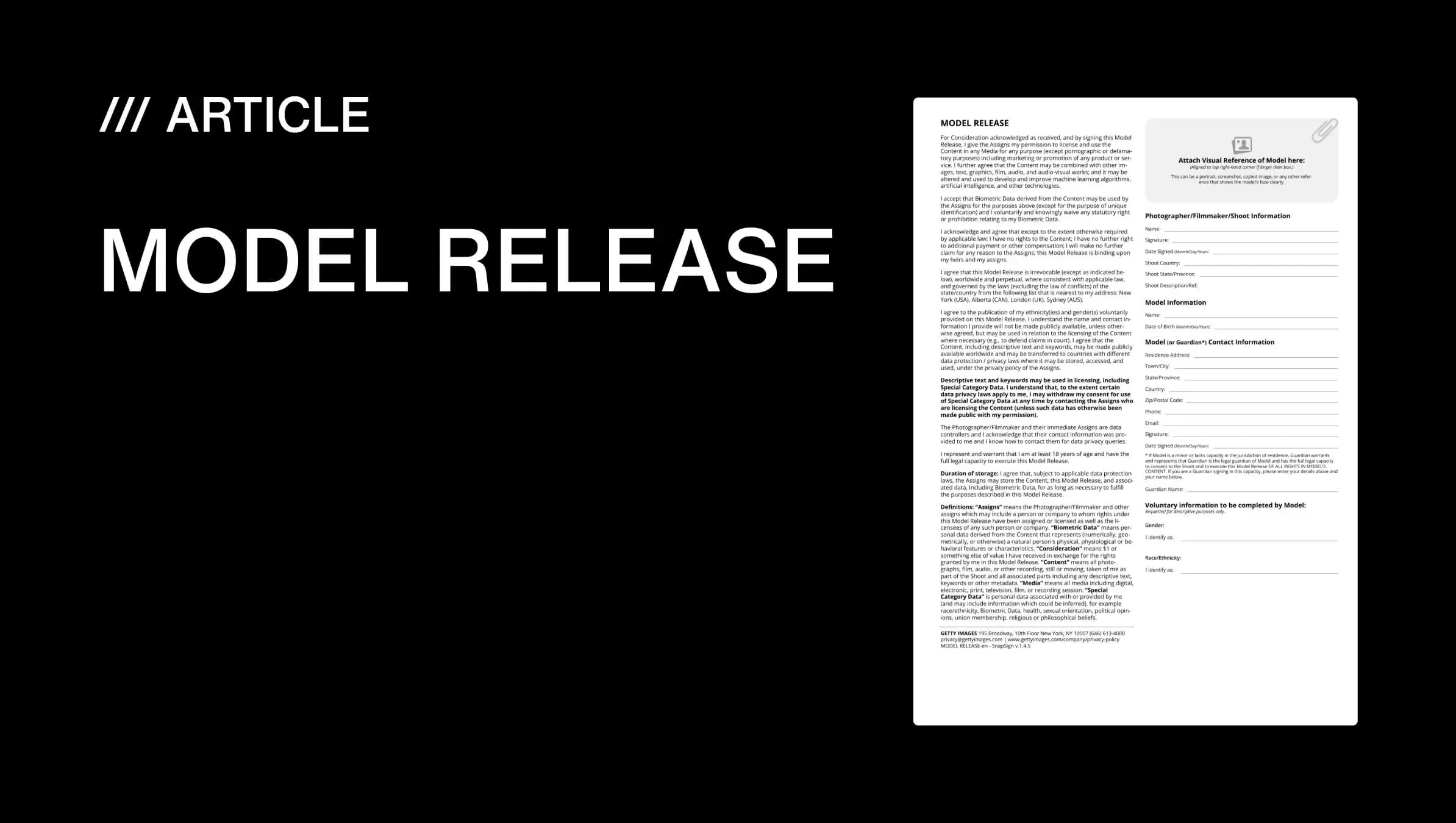
If you are uncertain whether your use falls into one of these exceptions, consult an attorney. The cost of legal advice is almost always less than the cost of being wrong. The American Society of Media Photographers (ASMP) maintains legal resources specifically for photography professionals. For a broader look at what model releases are and when they apply, start with our complete model release guide.
Exceptions are useful to know. But for the majority of working photographers — the ones shooting portraits, campaigns, events, and commercial work — the question is not whether you need a release. It is whether the release you are using would survive a demand letter. Here is the checklist that keeps photographers out of court.
How to protect yourself — a practical checklist
After studying these cases and talking to hundreds of photographers about their workflows, here is what actually prevents legal trouble — not theory, not scare tactics, but the practices that keep working photographers out of court:
- Get a signed model release before the shutter clicks. Not after the shoot, not "when the images are ready," not "if the client asks." Before. Verbal agreements, DMs, and informal handshakes are worth exactly zero dollars in court. A digital model release signed through a platform like SnapSign timestamps the signature and stores the completed form securely — no paper to lose, no ambiguity about when consent was given.
- Write scope into the release. Platforms, territories, campaign types, duration. Every dimension left unspecified is a dimension a lawyer can argue about later. Vague release language is the red flag that precedes most lawsuits — know which clauses to avoid before you hand a release to a model.
- Get a new release for new campaigns. If the original release was written for a specific campaign and the client wants to expand usage, get a new release or written confirmation that the original terms cover the expansion. The $150,000 campaign-expansion case happened because someone assumed the original release was "probably fine."
- Treat sensitive content with extreme care. Nude, boudoir, intimate, or vulnerable-context images need the strictest release language and, in many cases, separate consent forms that explicitly describe how the images will be used. No shortcuts here.
- Track your releases like financial records. Store digital copies, note usage rights, track expiration dates if applicable. When a demand letter arrives — and the cases above show they arrive years after the shoot — you need to produce the release immediately. SnapSign's contract hashing generates a SHA-256 hash for every signed release, so you can prove the document has not been altered since the moment it was signed.
- For EU subjects, build GDPR compliance into the release workflow. Explicit consent, purpose limitation, right to withdraw, data retention periods. The GDPR treats personal images as personal data — European privacy law does not care about your workflow convenience. The German case above — €10,000 for ex-employee photos — is a direct result of treating employee images as indefinite marketing assets rather than time-limited personal data.
One workflow detail I want to emphasize because I see photographers skip it constantly: send the release before the shoot, not at the shoot. When a model receives a digital signature request the night before, they can review the terms on their own time, on their own phone, without the pressure of a photographer and a full crew waiting. Fewer rushed signatures mean fewer disputes later. With SnapSign's remote signing, the model taps a link in their email, reviews the release, and signs — no app install required, no paper to scan, no ambiguity about when consent was given.
The numbers from the cases above tell a story that every photographer should internalize before their next shoot. Here it is, reduced to the simplest comparison:
| Prevention | Cost | Coverage |
|---|---|---|
| Digital model release, signed before the shoot | 2 minutes | Defines usage rights, platforms, territory, duration — prevents scope disputes |
| SHA-256 contract hashing | Automatic with SnapSign | Proves the release has not been altered — kills tampering claims |
| Digital archive, accessible on any device | Included | Produces the release instantly when a demand letter arrives — years after the shoot |
| Witness signature | 30 seconds | Satisfies Getty Images, Adobe Stock, and Shutterstock witnessed-release requirements |
| Lawsuit | Cost | What it takes from you |
|---|---|---|
| Scope dispute — small | $500–$3,000 | One unauthorized social media post |
| Scope dispute — moderate | $15,000–$30,000 | Half a year of income for many working photographers |
| Implied endorsement | $100,000–$325,000+ | Multiple years of income — potentially a career |
| Commercial misuse, no release | $150,000 | A house down payment. A studio. Years of work. |
| Privacy and dignity violation | $16,000,000 | Everything. The Vanessa Bryant verdict — an extreme outlier, but a real one. |
Final verdict - Model Release Fines
The cases in this guide share one uncomfortable truth: every single one of them was preventable. A $150,000 judgment for exceeding release terms — preventable with clear scope language. A $15,000 demand for shooting without a release — preventable with two minutes of paperwork. A $16 million verdict for privacy violation — an extreme outlier whose legal circumstances were unique, but the principle is the same: unauthorized use carries catastrophic risk. The cost of a proper photography model release form, signed before the shoot and stored securely, is measured in minutes. The cost of not having one, as the documented cases in this guide show, is measured in years of income. If you photograph people, the release is not optional — it is the only thing between you and the cases above.